
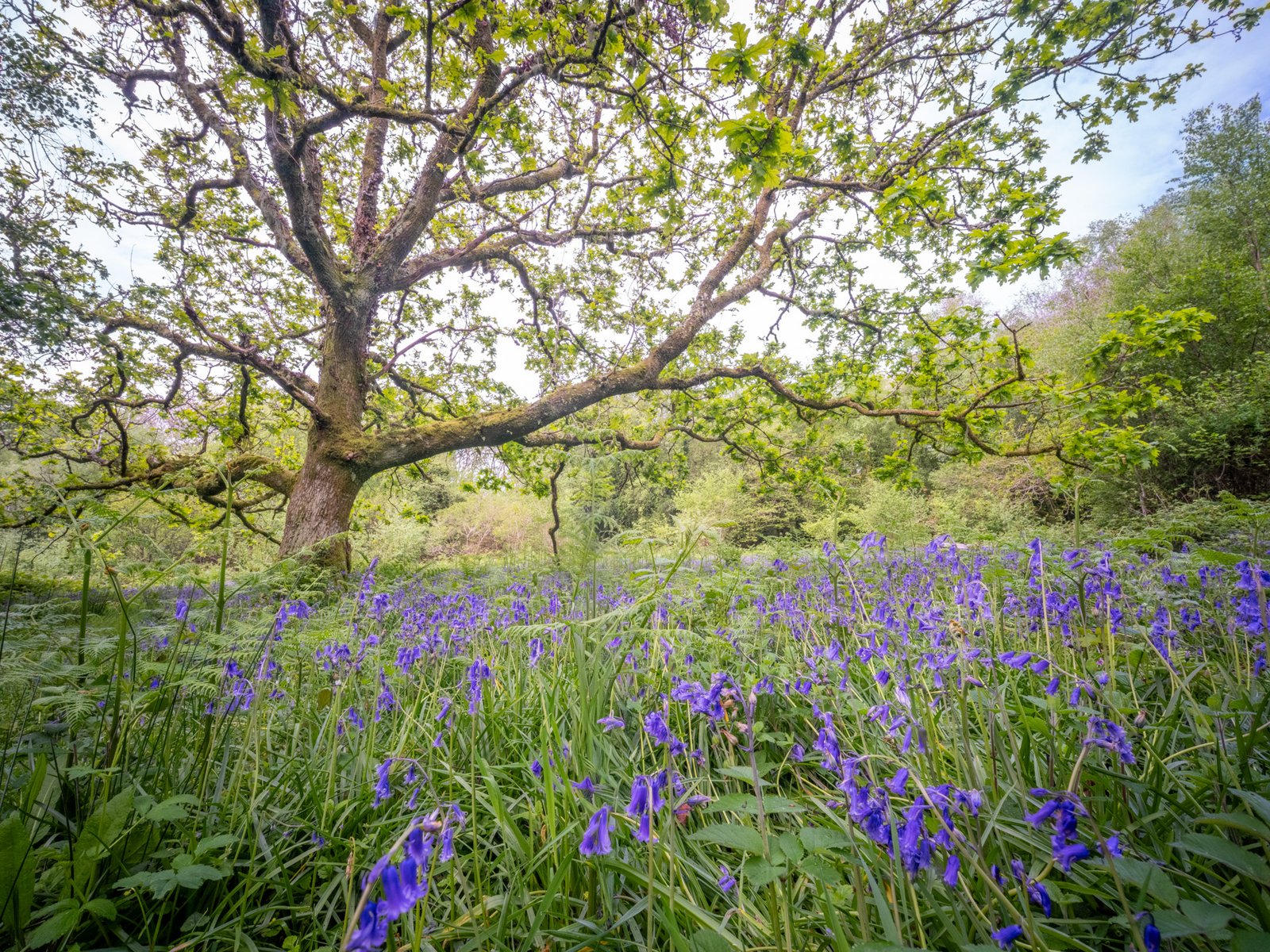
Bluebells, Oak Trees, and the Fujifilm GFX100S II: Woodland Photography in South Devon
There’s a small window each year where the woodlands begin to change.
The browns and greys of winter finally start to disappear beneath fresh greens, the trees slowly regain their leaves, and the forest floor fills with bluebells. It happens gradually at first, then seemingly all at once. Blink and you can almost miss it.
This year, if I’m honest, I probably left it a little too late.
Life and work have a habit of getting in the way, and before I really had chance to think about photographing bluebells properly, the season was already beginning to fade. The dense carpets of vibrant colour you sometimes see in photographs had already started to thin in places, and some areas were clearly past their best.
But despite that, I still wanted to go.
Not necessarily because I expected incredible photographs, but because I genuinely enjoy these woodlands.
The woodland itself sits somewhere in South Devon, not too far from Kingsbridge. It’s one of those places that feels both chaotic and calm at the same time. Fallen branches crisscross the floor, patches of light constantly shift through the trees, and the landscape itself rarely offers obvious compositions. Yet despite all of that visual complexity, the woodland always feels peaceful.
There’s a quietness there that’s difficult to explain properly.
Perhaps it’s because nature doesn’t really care about order in the way we often try to impose it in photography. Woodland photography rarely feels neat. Trees overlap one another, branches intrude into the frame, and light constantly fights against you. In many ways it’s one of the most difficult environments to photograph well.
And yet somehow it remains one of the most calming places to be.
I arrived fairly early in the morning while the light was still soft. At that time of day the woodland felt almost muted. There were no harsh highlights cutting through the trees yet, and the bluebells still retained some of the gentler tones that quickly disappear once the sun climbs higher.
The conditions weren’t dramatic.
There was no mist hanging between the trees, no glowing sunrise, and no particularly rare atmospheric conditions. Just soft morning light filtering through woodland in South Devon.
Sometimes that’s enough.
Photographing Woodland Rather Than Just Bluebells
Because I already knew I’d left the bluebells slightly late, I think it naturally changed the way I approached the session.
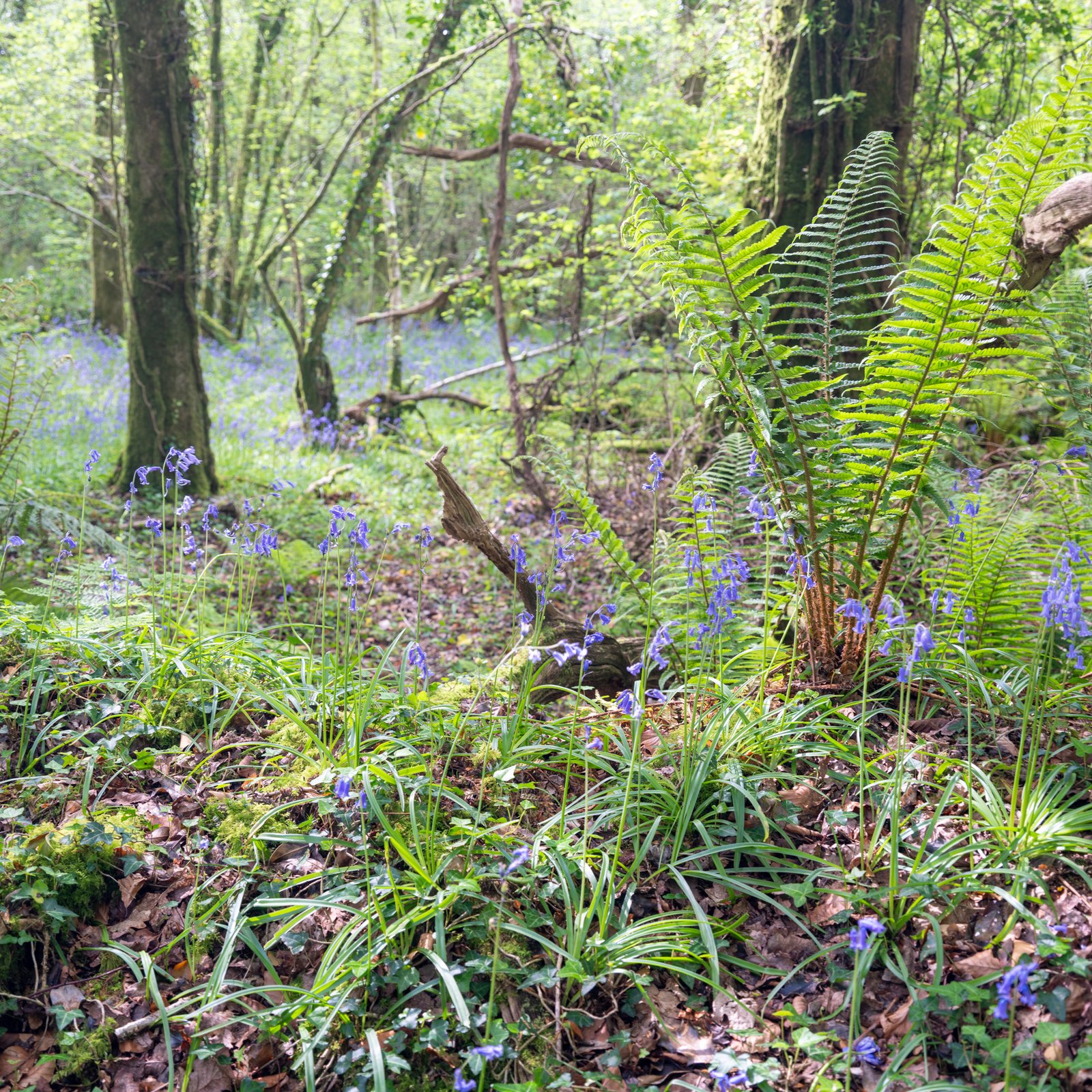
Rather than focusing heavily on close-up photographs of the flowers themselves, I found myself looking more at the woodland as a whole. The bluebells became part of the scene rather than the subject entirely.
In many ways I actually prefer that approach.
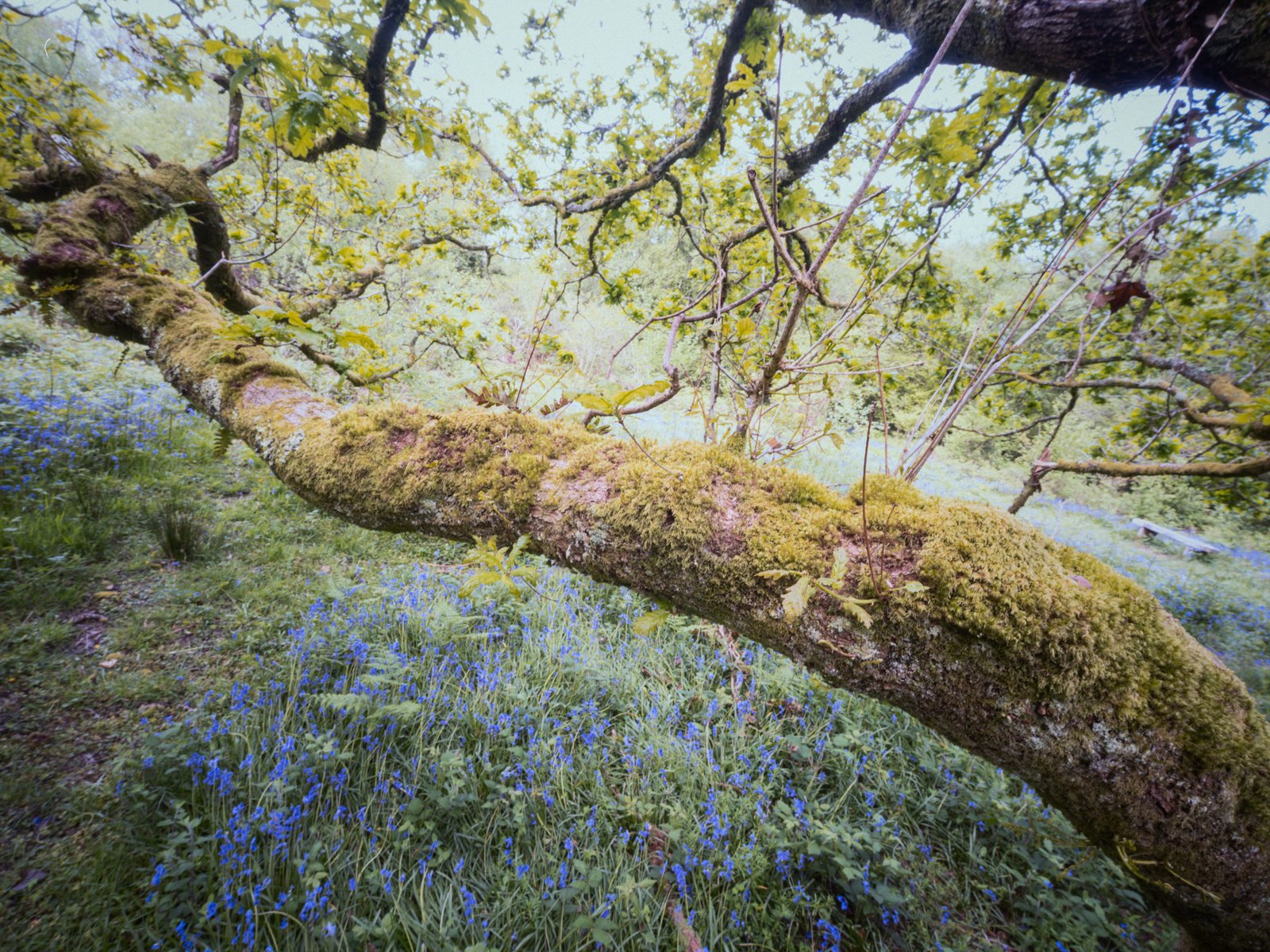
Photographing individual flowers can often feel a little isolated from the wider atmosphere of a location. What interested me more was how the bluebells interacted with the oak trees, winding paths, and layers within the woodland itself.
A lot of woodland photography is about trying to simplify chaos.
That sounds contradictory because woodland is inherently messy, but photography often involves finding small pockets of order within that mess. A path leading through the trees. A shaft of light illuminating part of the frame. A foreground element that creates separation.
Those smaller moments matter.
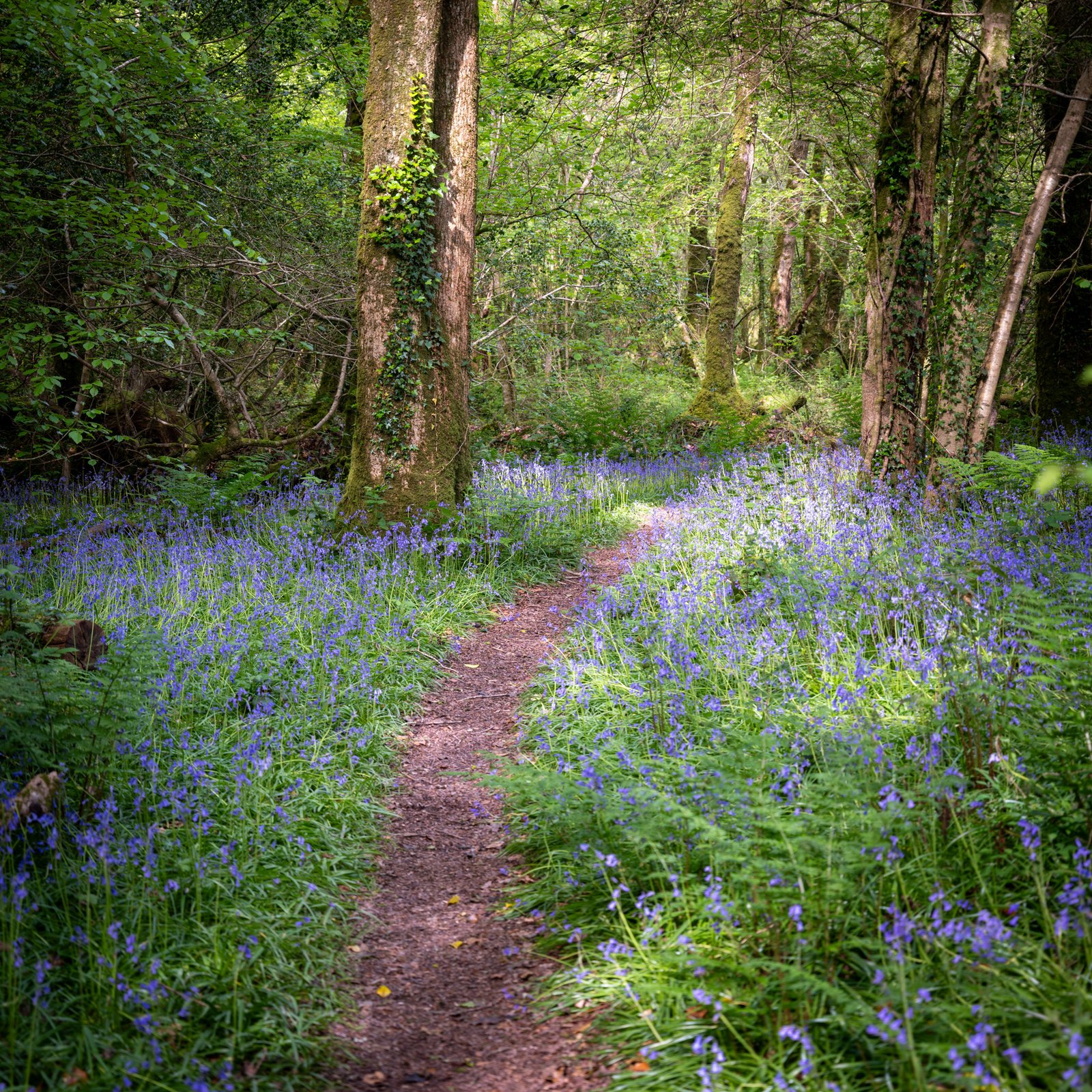
One of my favourite photographs from the session involved a winding path cutting through the woodland, with dappled light picking out different parts of the scene. It wasn’t an especially grand photograph, but I liked the atmosphere it carried.
The patches of sunlight almost guided the eye through the frame naturally.
Scenes like that are easy to walk past because they don’t immediately announce themselves. Woodland photography often rewards patience more than dramatic locations do. The compositions reveal themselves slowly rather than instantly.
I think that’s part of why I enjoy it.
Using the Fujifilm GFX100S II in Woodland
For this trip I used the Fujifilm GFX100S II alongside the GF 35-70mm for most of the photographs.
Although medium format cameras are often associated with tripod work and slower photography, around half the images from this session were actually shot handheld. The IBIS in the GFX100S II genuinely does an excellent job, and for this kind of woodland work it allowed me to move around more freely without constantly setting up a tripod.
That freedom matters in woodland.
Unlike photographing a coastline or mountain vista where compositions are often fixed and obvious, woodland photography can feel much more reactive. Sometimes you notice small details or fleeting light for only a few moments before it changes completely.
Being able to quickly raise the camera and respond to a scene without overthinking it helped the process feel more natural.
Interestingly, despite using medium format, I don’t think the camera itself fundamentally changed how I photographed the woodland.
I was still very much led by the scene rather than the equipment.
That probably sounds strange considering how much discussion surrounds cameras online, but once I’m actually photographing something, most of that disappears. I’m not really thinking about sensor size or specifications in the moment. I’m usually thinking about balance, light, atmosphere, and whether a scene feels right emotionally.
The GFX files do handle woodland tones beautifully though.
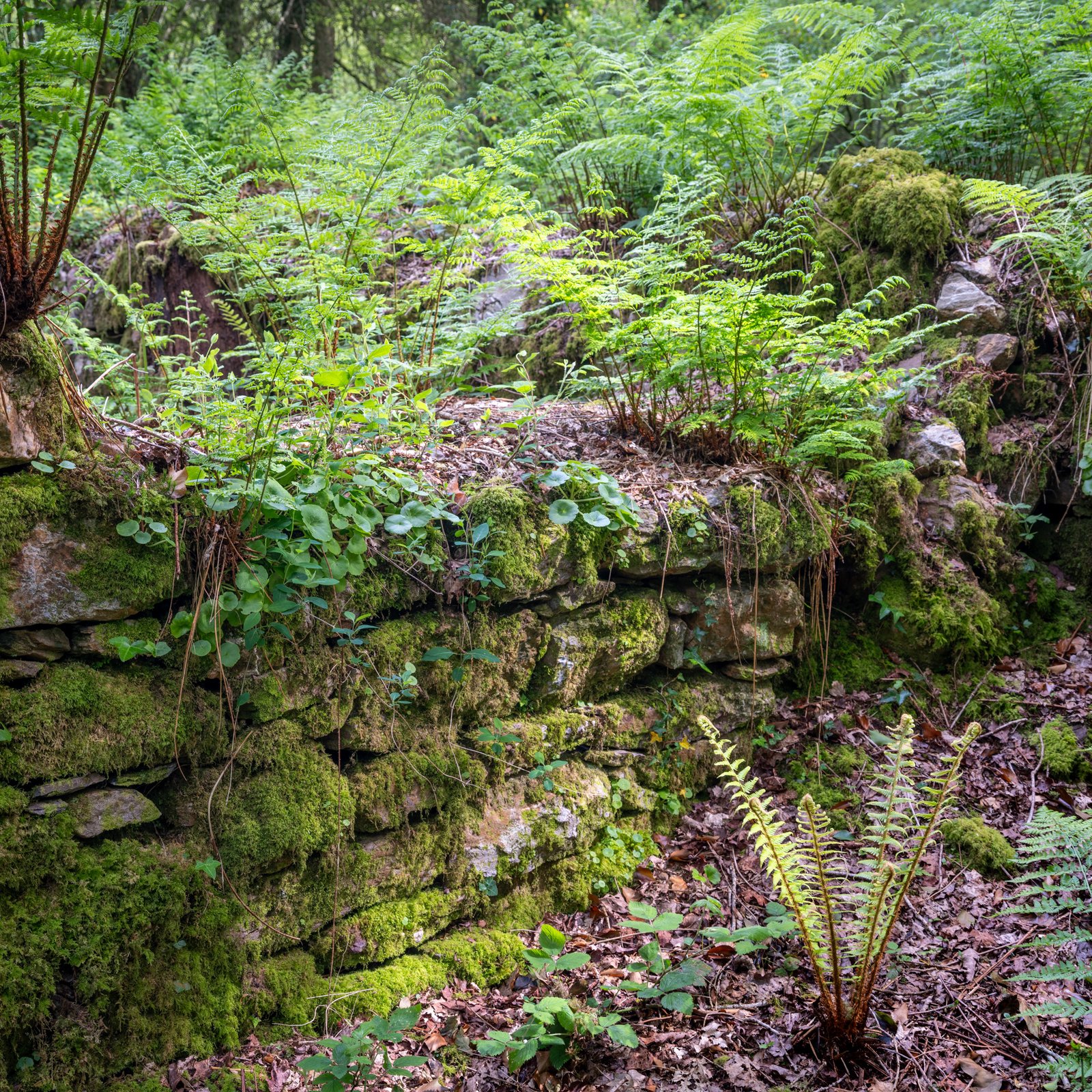
Greens can often become overpowering or muddy in woodland photography, especially once sunlight begins filtering through leaves, but the files from the GFX retained subtle tonal separation really well. Even with fairly minimal processing later in Lightroom, there was still plenty of depth within the images.
Most of my editing was intentionally restrained.
There was no heavy manipulation or dramatic grading involved. Mainly lens corrections, some level adjustments, and occasionally a slight vignette to help focus attention within the frame.
That felt appropriate for the subject matter.
The woodland already had enough character without forcing additional drama into the photographs.
0 Comments