
Arriving Slowly in Venice
We arrived the way Venice often prefers — indirectly.
The flight came in on a Sunday morning, the airport wrapped in mist thick enough to soften edges and muffle sound. Everything felt subdued before we’d even left the terminal. We did what we always do: bought the right tickets, followed the familiar routine. And still, we got it wrong.
The bus was correct. The tickets were correct. We just boarded the wrong one.
That small misstep set the tone. A short detour. Mestre instead of the city. Then a train — the right one, as it turned out — abandoned early because doubt crept in. We waited for the next. None of it dramatic. None of it stressful. Just a quiet reminder that Venice doesn’t reward haste or certainty.
I kept checking my watch, not because I was late, but because I felt like I should be.
By the time we stepped out at Santa Lucia, the city felt earned rather than reached. The hotel was close. The day was still young. The mist hadn’t lifted.
A City That Refuses to Be Rushed
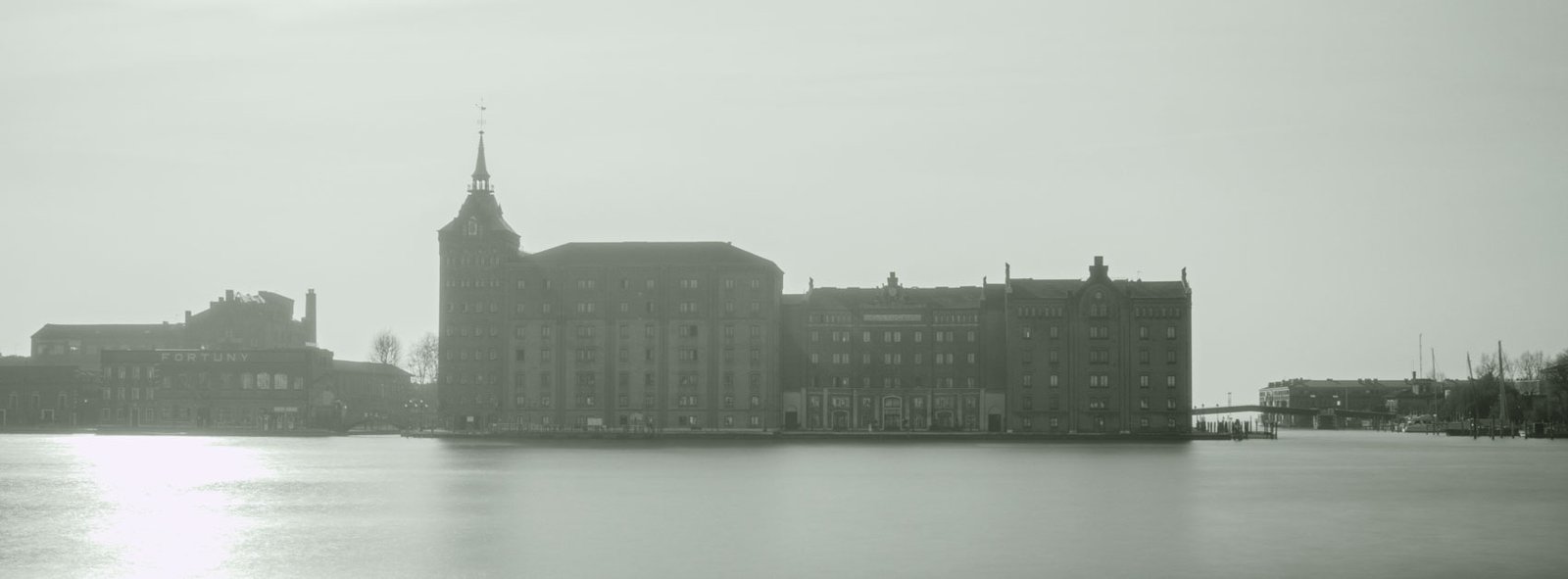
Venice is photographed relentlessly, often loudly. But that isn’t the Venice I recognise, and it isn’t the one I’m drawn to.
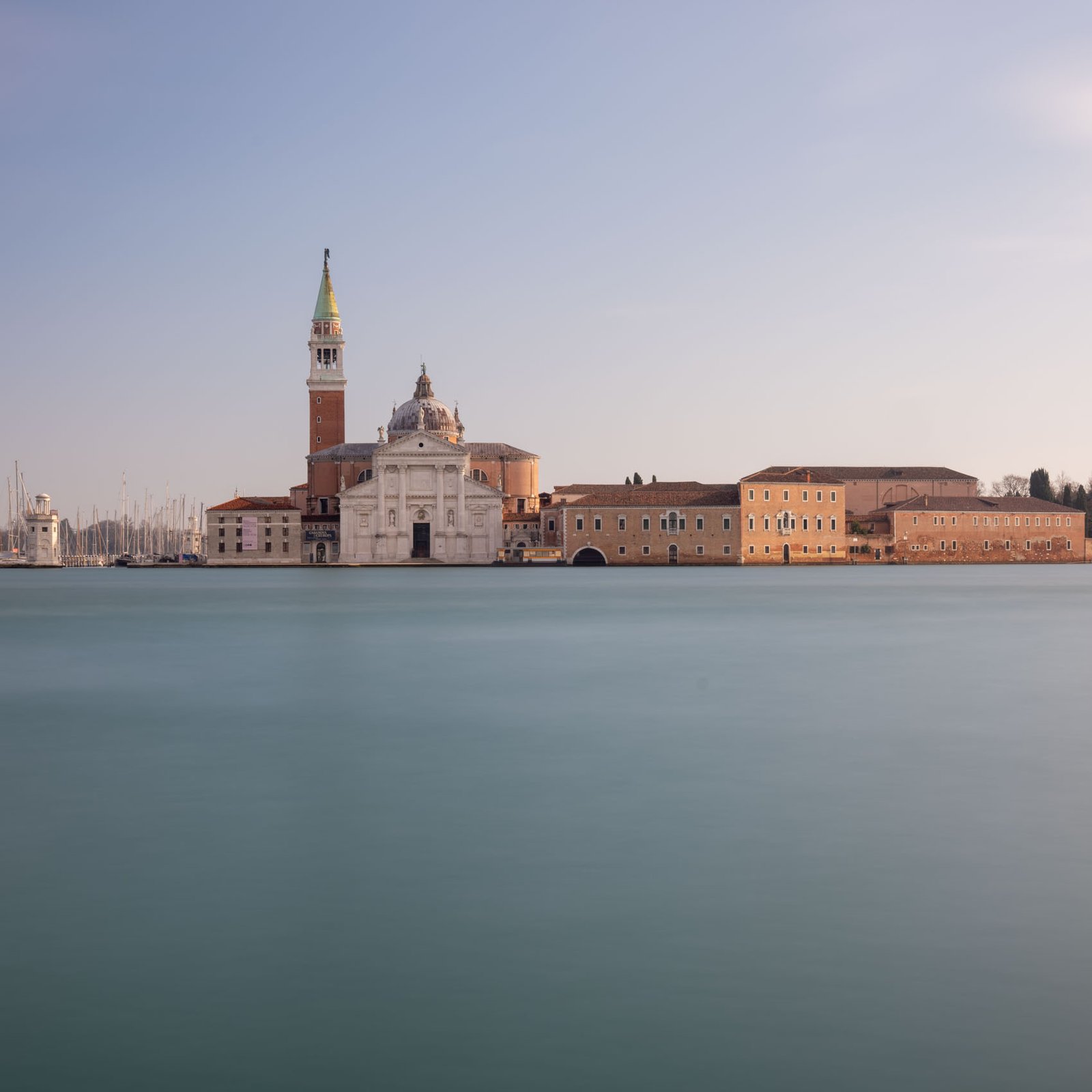
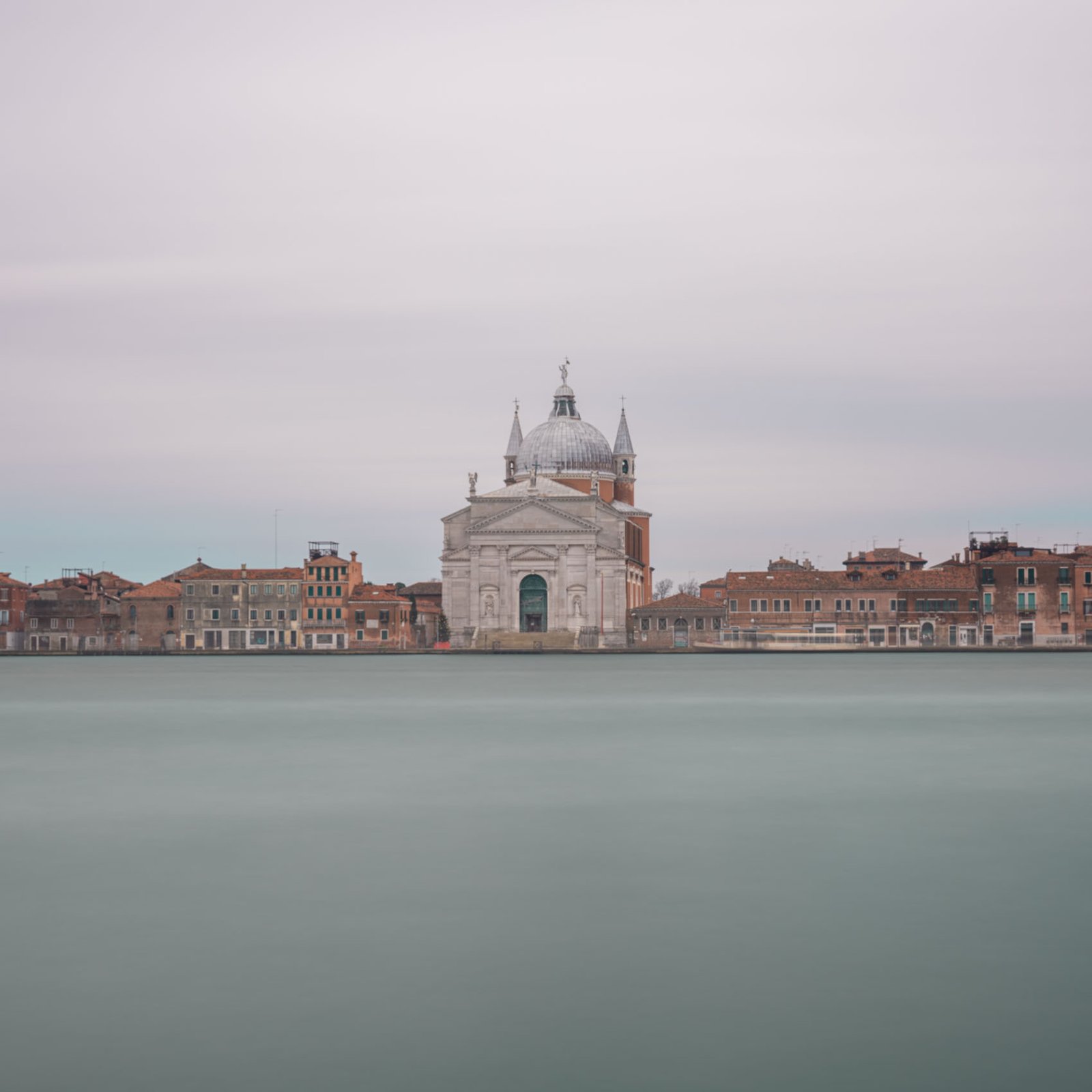
These photographs come from standing still for longer than feels comfortable. Letting people pass through the frame and then disappear. Letting boats become gestures rather than subjects. Letting the water decide what stays and what dissolves.
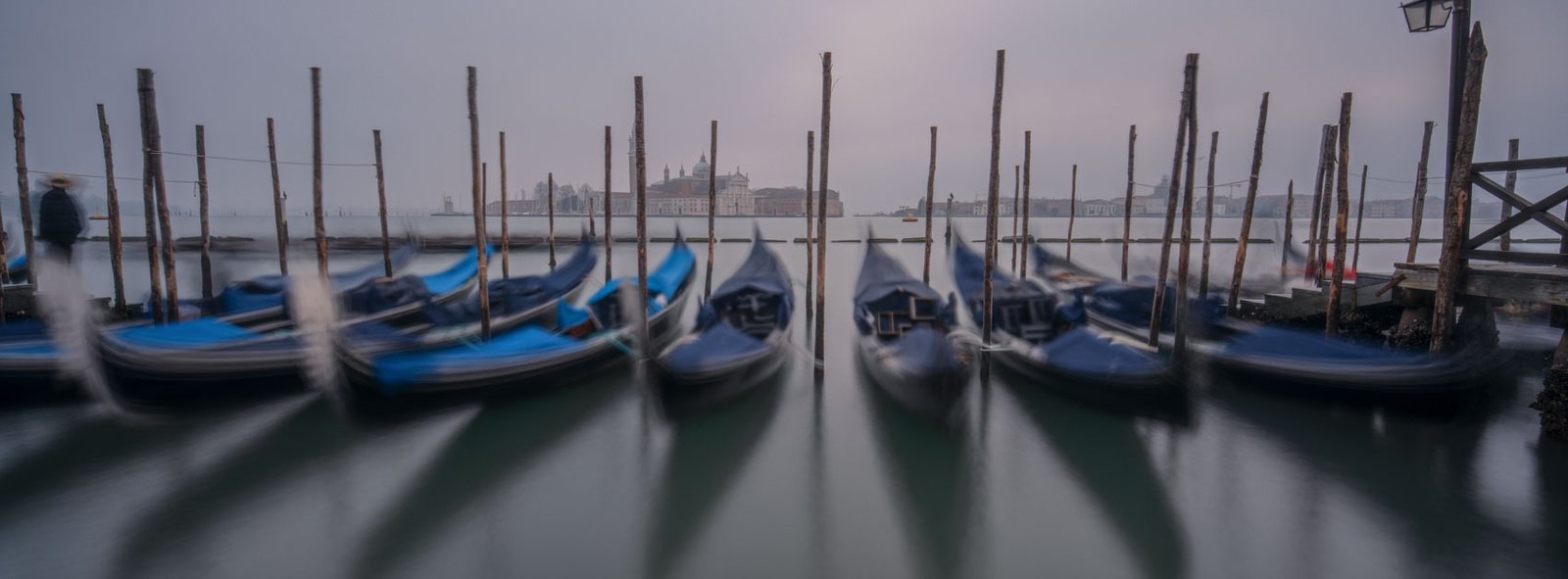
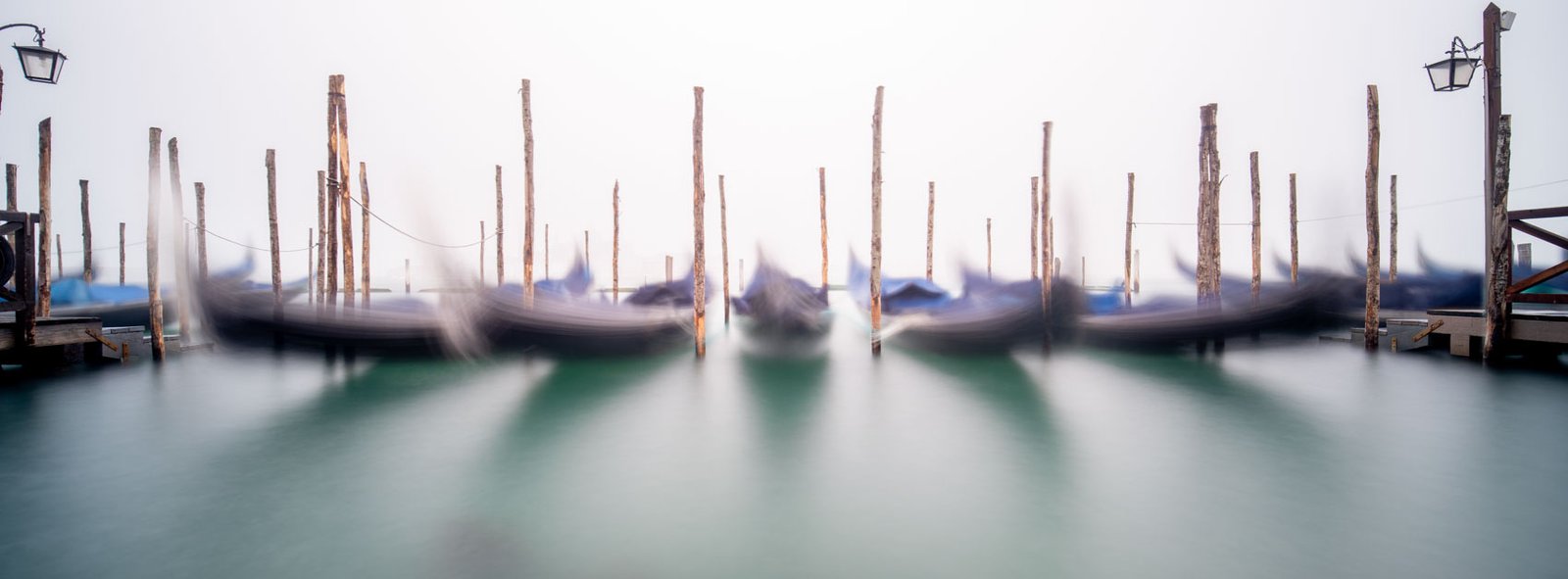
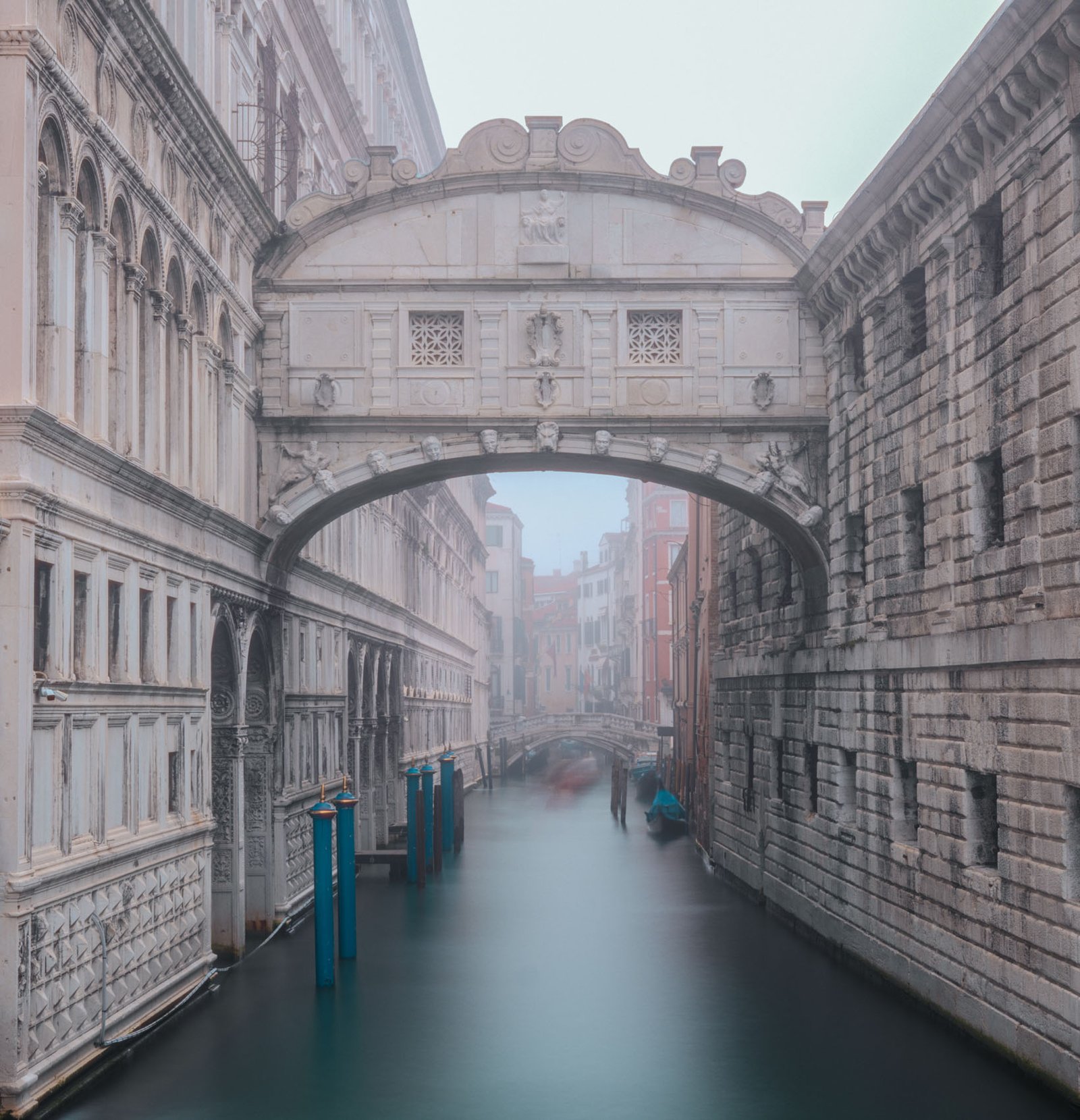
The gondolas blur not because they’re moving fast, but because time is being stretched. The poles remain — fixed, scarred, patient — while everything else smears and softens around them. It’s less about capturing Venice and more about allowing it to happen.
Mist helps. It simplifies. It removes the unnecessary and leaves behind shape, rhythm, repetition. It turns one gondola into many, and many into something almost abstract. The city stops performing and becomes quieter, more private.
These two images (below) were made on different days with the same Laowa 19mm lens, from slightly different positions along the same stretch of water. Returning to the same location matters. A small change in viewpoint, tide, light, or timing is often enough to alter the entire photograph. Repetition isn’t about refinement — it’s about paying closer attention.
Familiar Places, Seen Differently
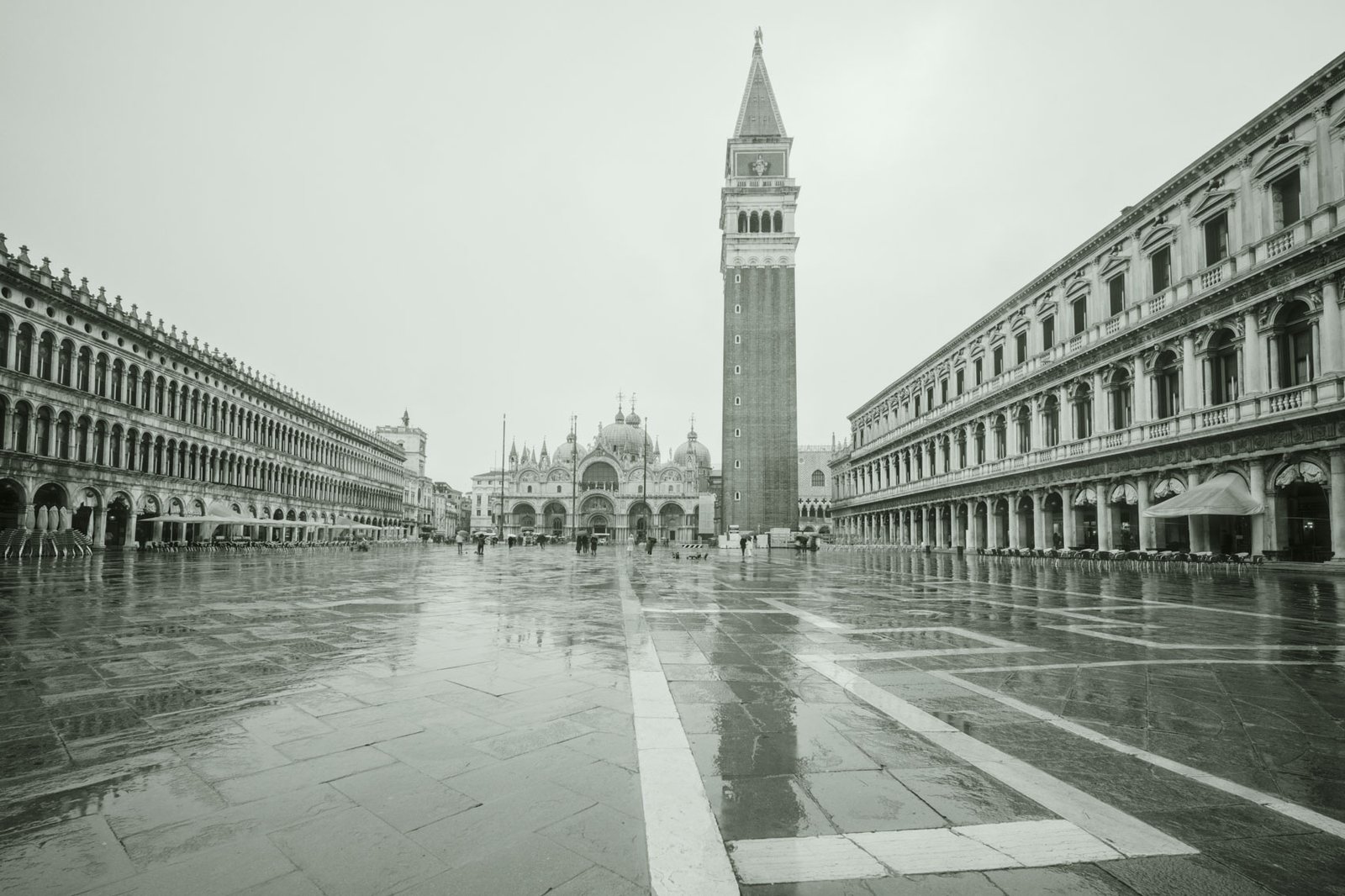
There are places here I’ve seen many times before. Piazza San Marco is one of them. It’s impossible to pretend otherwise. And yet, in fog, with water on the stones and only a handful of figures moving through the space, it becomes something else entirely.
Reflections matter more than façades. Footsteps echo. The scale shifts. What is usually overwhelming becomes restrained, almost fragile.
I’m not interested in proving I’ve been somewhere. These images aren’t souvenirs. They’re pauses. Records of waiting. Of choosing not to chase the postcard moment because something quieter was unfolding instead.
The bridge, the canal, the distant façades — they aren’t destinations here. They’re thresholds. Places you pass through slowly, if at all.
The Bag, the Kit, and Working Slowly
I kept the kit deliberately simple, but not as minimal as I first imagined. The bag was heavier than it needed to be, not because I’d overpacked, but because I’d committed to working slowly. Tripod, camera, two lenses, and filters. It’s the kind of setup that discourages spontaneity and rewards decisions.
For travel, a messenger-style bag would probably make more sense. My Shimoda Explore is better suited to landscape photography closer to home, where it really comes into its own. In Venice, though, carrying it all day reinforced the pace I’d set myself. Nothing was quick. Every stop was deliberate.
The GFX100S II surprised me as a travel camera. It’s not small, and it doesn’t pretend to be, but once I accepted its pace it became part of the rhythm of the trip. I carried two lenses: the Fujifilm 35–70mm and the Laowa 19mm. In practice, the 35–70mm probably accounted for around seventy percent of the images. It gave me flexibility without encouraging constant lens changes, which mattered more than I expected.
The Laowa 19mm — bought second-hand from MPB — was more deliberate. I was aware of its limitations going in, but so far I’ve been happy with it. Wide lenses don’t let you hide; they force you to think about edges, verticals, and what you’re willing to leave in the frame. Returning to the same spot from a slightly different viewpoint often made more difference than changing focal length.
I also carried a small set of K&F Concept magnetic filters with step rings, mainly neutral density. The strongest I used was an ND1000, enough to stretch time without pushing things too far. They were quick to work with and didn’t interrupt the flow once the tripod was set.
That tripod was a Manfrotto CX190 carbon fibre, light enough to carry all day but stable enough for the longer exposures I was after. Every stop meant unpacking the bag, levelling the legs, waiting for movement to settle, and then making the exposure. It wasn’t efficient, but it was consistent. And consistency, more than convenience, is what shaped the images from this trip.
Leaving Space
Looking back, the small mistakes at the start feel appropriate. The wrong bus. The unnecessary wait. The sense of being briefly out of step. They created space — mental space — to see Venice again without expectation.
My approach to editing is intentionally limited. Most of the work happens in-camera, and post-processing is usually confined to basic tonal adjustments — levels, balance, and little else. Occasionally I’ll take an image into Dehancer Pro to introduce a film-like response, but even then the aim is restraint rather than transformation. I try to avoid cloning, and I never replace skies; getting it right at the moment of exposure matters to me. While I admire images that lean heavily into interpretation, I’m more interested in photographs that feel believable. When an image starts to feel too perfect, it can lose the quiet uncertainty that first drew me to the scene.
Venice doesn’t need to impress. It doesn’t need to explain itself. It rewards patience, repetition, and a willingness to stand still while the world moves through the frame.
Certainty never seems to last very long here.
0 Comments