
Dartmoor in the Rain: A Day of Photography, Loss, and Reflection
Landscape photography is rarely predictable. You can plan a location, study the weather forecast, pack the right kit, and yet the day often unfolds in ways you could never expect. My recent trip to Dartmoor, near Ashburton, was one of those days: a combination of fleeting beauty, relentless rain, expensive losses, and the reminder that sometimes the struggle is what makes the images more meaningful.
This blog post is both a record of that shoot and a reflection on the unpredictable nature of photography in the wild. Along the way, I’ll share the three images I managed to create, thoughts on gear limitations, and why Dartmoor never fails to inspire, even when it drenches you to the bone.
The Setting: Dartmoor in Autumn
Dartmoor is a landscape that has shaped my photography for years. It is rugged, unpredictable, and deeply atmospheric. Every time I return, it feels like I’m stepping into a place that exists slightly apart from the rest of the world.
In early autumn, Dartmoor is a kaleidoscope of textures and colours. The moss-covered rocks glow a luminous green, ferns stretch out across the undergrowth, and the rivers swell with fresh rain. It is one of the best times to photograph woodland streams, when the contrast between golden leaves and green moss is at its strongest.
On this trip, I set out to explore a section of woodland near Ashburton. My plan was simple: to slow down, work with what the weather gave me, and create a small series of images that captured the softness and flow of water cutting through the woodland.
The Weather: Relentless Rain and Unexpected Warmth
The forecast promised drizzle, but what I got was near-constant rain. From the moment I stepped onto the path, water became the defining feature of the day. My jacket quickly soaked through, and the constant mist in the air made it feel as though everything — camera, bag, and myself — was being slowly absorbed into the landscape.
What surprised me most, however, was not the wet but the warmth. Despite the steady rain, the conditions were strangely humid. Within half an hour, I found myself peeling off a layer of clothing just to stay comfortable. It was one of those contradictory moments Dartmoor often throws at you — drenched to the skin, yet somehow overheated.
This balance of discomfort and persistence became the rhythm of the shoot. The rain tested my patience, but it also created the very atmosphere that made the images possible.
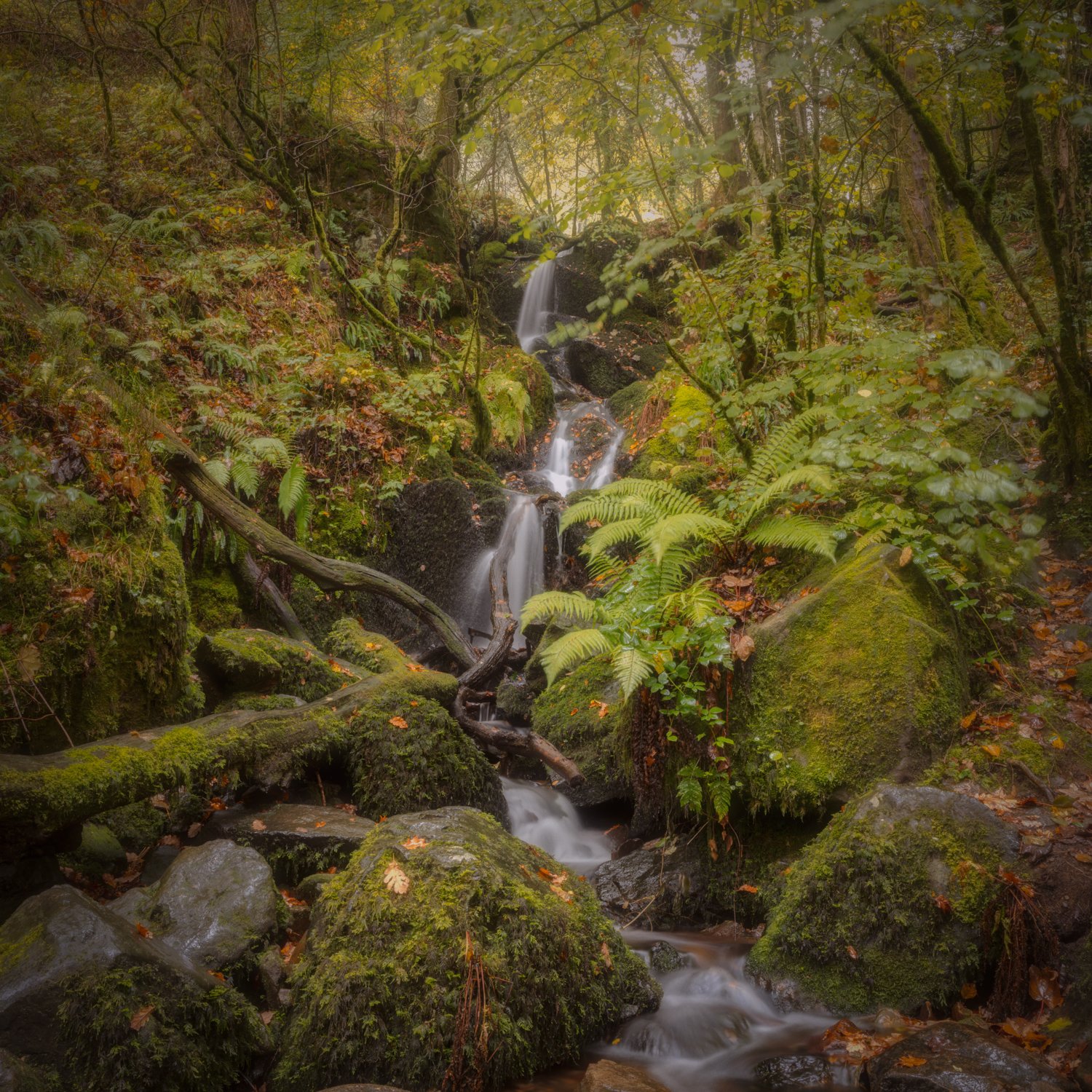
Image One: The Woodland Cascade
The first image of the day (above) was taken deep in the woodland, where a small cascade tumbled down through mossy rocks and autumn leaves.
Framing this shot required patience. The drizzle softened the light beautifully, but it also misted the front element of my lens every few seconds. I used the Fujifilm GFX100S II paired with the GF 35–70mm lens, working closer to the wider end of the zoom.
I wanted to give the water that silky, flowing look without losing texture, so I opted for a slow shutter speed, supported by a tripod. The GFX100S II’s dynamic range allowed me to hold detail in both the highlights of the water and the shadows of the rocks.
What I like most about this image is the balance of chaos and order: fallen branches pointing diagonally, ferns arching gracefully, and the water threading a clear line through it all. The drizzle added a soft haze to the background, almost like a natural diffusion filter.
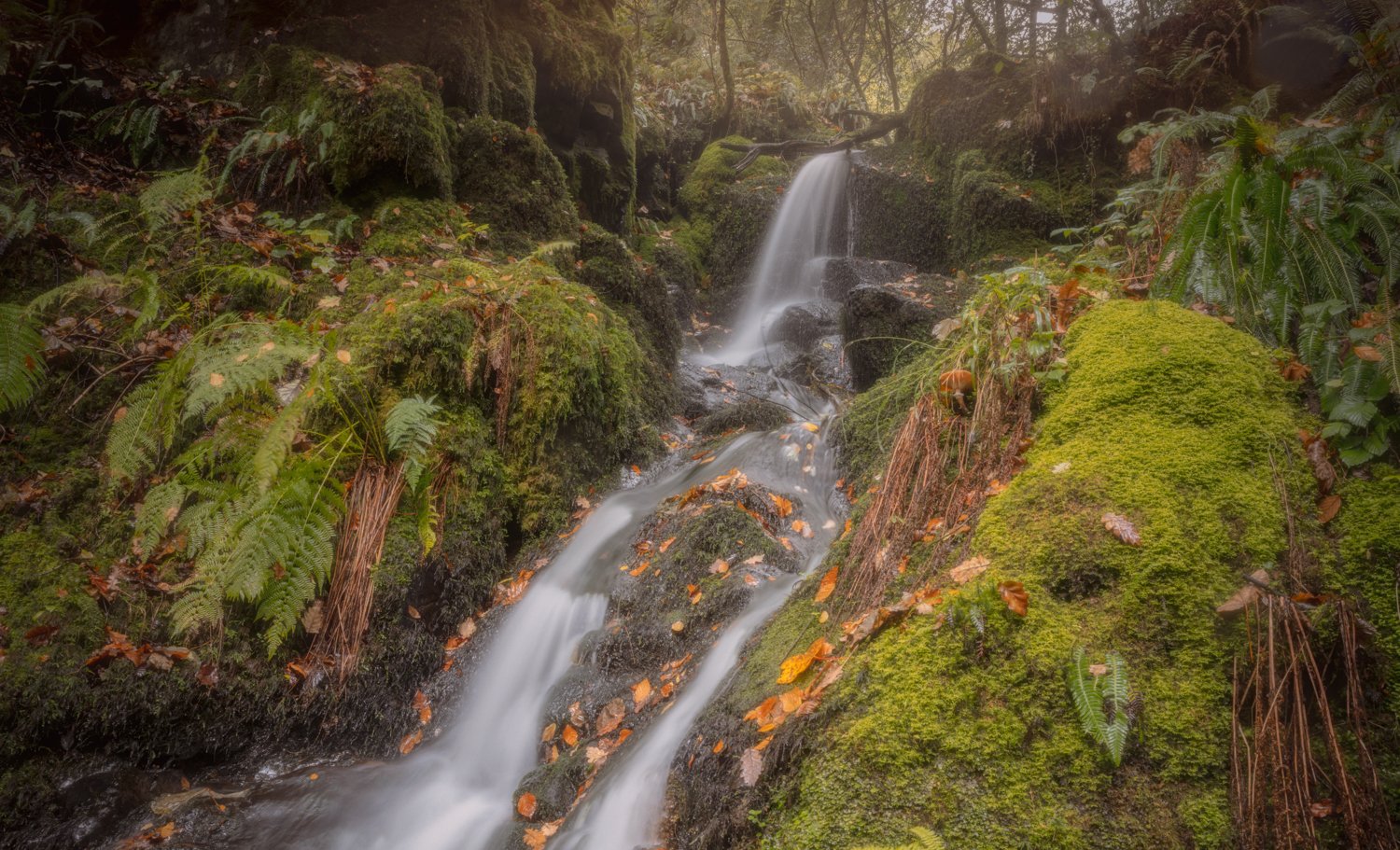
Image Two: Close to the Water
For the second image, I moved in closer. I wanted to isolate a section of the cascade, focusing on the relationship between water, moss, and fallen leaves.
This composition feels more intimate than the first. By moving in, I was able to capture the energy of the water as it poured over the rocks, framed by lush ferns and golden leaves clinging to the moss.
Shooting so close to the water in pouring rain was risky. One misplaced step could have soaked the camera completely. But the GFX100S II handled it admirably, even as I wiped rain from its body between shots.
This image highlights something I love about woodland streams: they are never still, never the same twice. Every leaf that floats into frame, every change in flow, creates a unique moment. Long exposure photography turns those fleeting moments into something more permanent.
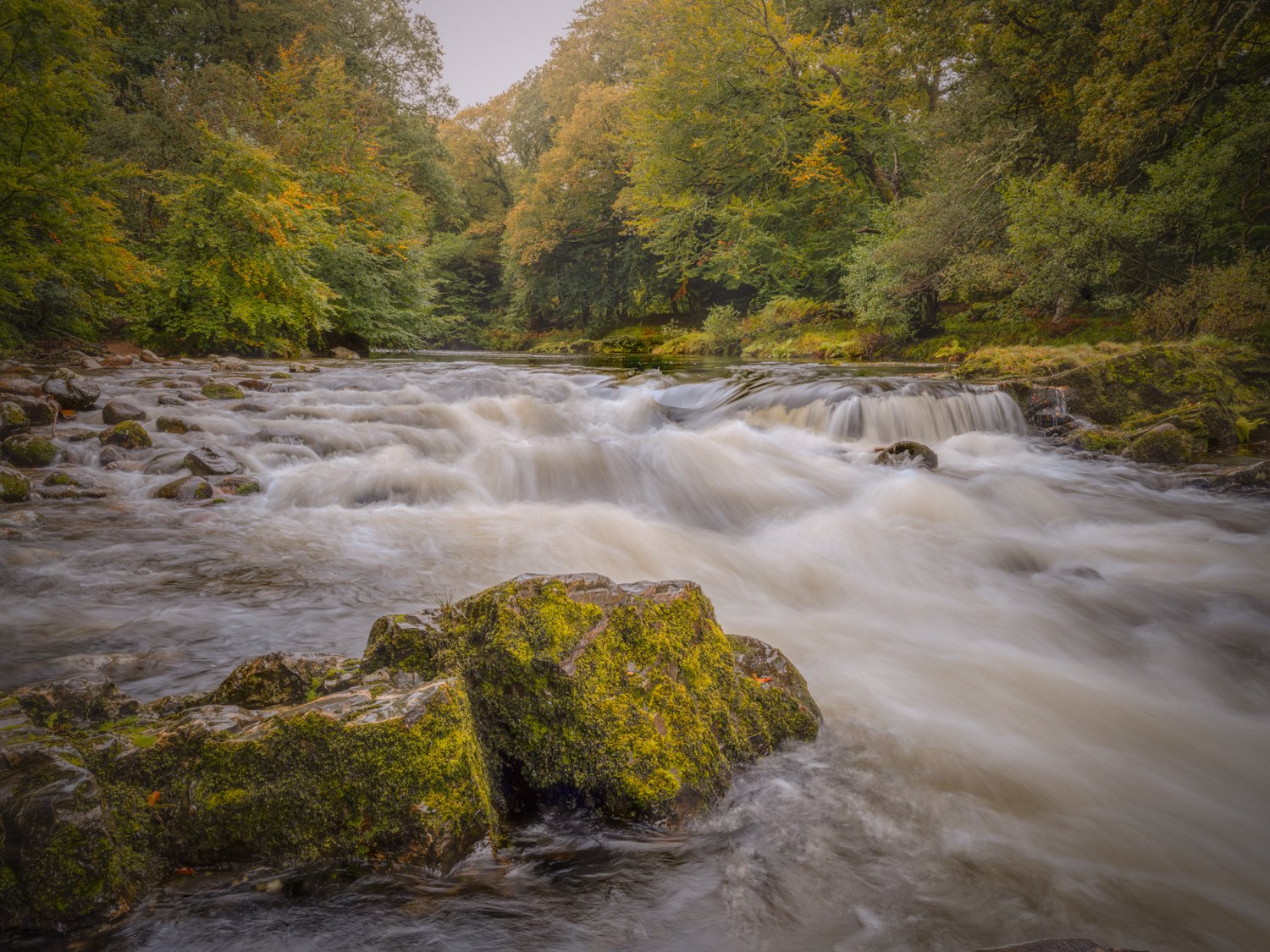
Image Three: The River in Full Flow
The final image of the day was taken further downstream, where the stream widened into a fast-flowing river. The rain had swollen the water, and it rushed over rocks with a powerful, almost overwhelming energy.
For this shot, I stepped back and went for a wider perspective, capturing the river, the surrounding woodland, and the autumn colours in the trees. The water’s movement contrasts with the solidity of the moss-covered rocks, creating a sense of power contained within the landscape.
This was the image that gave me the greatest sense of scale. Dartmoor often feels immense, even when you’re standing at the water’s edge. Here, the river becomes the heartbeat of the woodland, its sound filling the air, its movement shaping the scene.
The Losses: Gear Gone Missing
As rewarding as the images were, this shoot was also one of the most expensive days I’ve had in recent memory. Somewhere along the way, I lost one of my DJI mics, a piece of kit I rely on heavily for video work. To make matters worse, when packing up in the rain, I misplaced my Osmo 360 camera.
Both items are not only costly but also useful for my YouTube channel, where audio quality and creative shots help bring photography sessions to life. Losing them was frustrating, and if I’m honest, demoralising in the moment.
But gear comes and goes. It hurts, yes, but the images remain. And perhaps, in a way, losing things is part of the story — another reminder that photography in the wild is unpredictable.
Reflections on Gear: The 35–70mm and the 20–35mm
Shooting with the Fujifilm GF 35–70mm was both a blessing and a limitation. It is light and sharp, and for most situations, it performs beautifully. But when working in tight woodland spaces, I found myself wishing for something wider.
The GF 20–35mm lens has been on my mind for a while. It would open up new compositional possibilities, especially when trying to capture the scale of rivers and waterfalls. On days like this, when I want to exaggerate the sense of space or fit more of the scene into frame, it feels essential.
The challenge, of course, is cost. Medium format lenses are not cheap, and the 20–35mm is no exception. But every time I review images like these, I feel the pull toward investing in it. A lens that allows you to see differently is more than just glass — it’s a new way of telling stories.
Why Photograph in the Rain?
Some might ask: why bother shooting in such miserable weather? Why risk your gear, your comfort, and your wallet for a few images?
The answer is simple: because the rain changes everything.
Rain softens light, deepens colour, and adds texture to the landscape. It transforms Dartmoor from a picturesque scene into something moody, immersive, and alive. Without the drizzle, the moss wouldn’t glow. Without the rain-swollen river, the flow wouldn’t feel so powerful.
Photography isn’t always about convenience. It’s about connection — with place, with weather, with the unpredictable beauty of nature.
Lessons from the Day
Looking back, this trip to Dartmoor taught me several things:
-
Persistence matters. Even when soaked, tired, and frustrated, staying with the process can yield meaningful images.
-
Gear is replaceable, but experiences aren’t. Losing kit is frustrating, but the moments I had in that woodland are irreplaceable.
-
The right lens can change everything. The 35–70mm performed well, but the day reinforced my desire for the 20–35mm to expand creative possibilities.
-
Rain is a gift in disguise. It may ruin your comfort, but it enriches the images.
Closing Thoughts
This shoot near Ashburton was far from easy. The rain was relentless, the losses were costly, and comfort was nowhere to be found. Yet the images I created carry the memory of that day — the sound of water, the glow of moss, the hush of drizzle falling through the trees.
Photography is rarely perfect. It’s messy, unpredictable, and sometimes expensive. But that’s also what makes it meaningful. When I look back at these three images, I don’t just see waterfalls and rivers — I see persistence, loss, and the reminder that beauty often emerges from struggle.
Dartmoor gave me no mercy that day, but it gave me something better: images that tell a story, not just of place, but of experience.
0 Comments