
Fujifilm GFX100S II Review – A Full-Frame Nikon Shooter’s Experience with Medium Format
The Fujifilm GFX100S II offers stunning image quality, exceptional dynamic range, and a slower, more deliberate shooting experience. Coming from a Nikon full-frame background, the transition was smoother than expected, though hidden costs like new memory cards, adapters, and a bigger bag should be considered. It’s not for fast action, but for landscapes and fine art, it’s a game-changer.
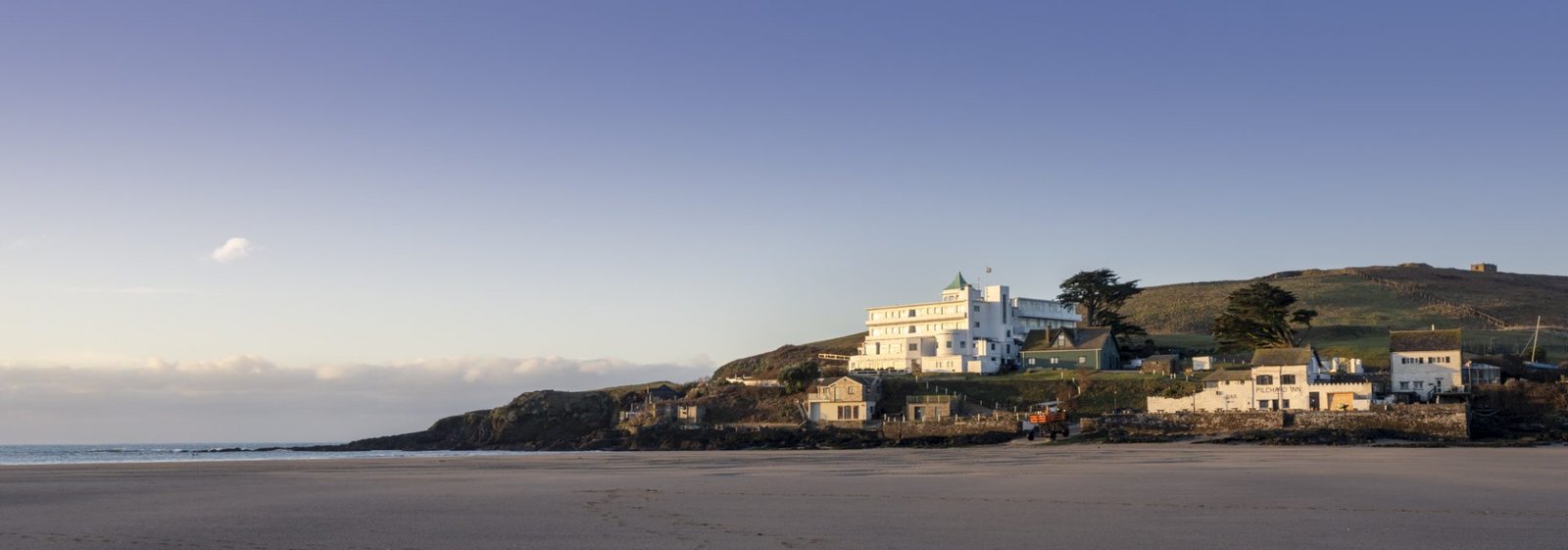
This image captures the stunning Burgh Island Hotel off the South Devon coast, bathed in the warm glow of the setting (or rising) sun. The Art Deco hotel, a striking white landmark, stands proudly against the rugged landscape of Burgh Island, with the historic Pilchard Inn and surrounding cottages adding to the charm of this timeless scene.
Taken from the sandy expanse of Bigbury-on-Sea beach, the composition leads the eye across the untouched shoreline towards the island, where soft evening (or morning) light enhances the textures of the architecture and landscape. The calm sea and pastel sky provide a tranquil backdrop, making this a perfect moment of serenity and coastal beauty.
Shot with the Fujifilm GFX100S II, this medium format image brings out every fine detail, from the ripples in the sand to the distant hillside contours. This is a place rich in history, inspiration, and ever-changing light—an ideal subject for any photographer drawn to dramatic coastal landscapes.
Introduction
Switching from full-frame to medium format is a big decision, one that comes with excitement, anticipation, and a bit of apprehension. Coming from a Nikon full-frame background, I was curious to see how the Fujifilm GFX100S II would fit into my workflow. After a month of use, including a dedicated field test with both a sunset and sunrise session, I’m ready to share my experience.
First Impressions: Build, Handling, and Ergonomics
Coming from Nikon full-frame DSLRs and mirrorless cameras, my biggest concern was whether the GFX100S II would feel overly bulky or slow in operation. To my surprise, it’s a lot more manageable than I expected. While it is larger than a full-frame mirrorless camera, it’s not dramatically so, and the grip is well-contoured, making it comfortable to hold even for extended periods.
The camera’s menu system is intuitive, though it does take a little adjustment coming from Nikon’s interface. The top LCD panel is a fantastic addition, providing quick access to key settings at a glance. However, I did miss having dedicated dials for ISO and shutter speed, something Nikon DSLRs and Fujifilm’s X-series cameras excel at. That said, the customisable buttons and command dials made up for this once I adapted to them.
The GF 35-70mm lens is a pleasant surprise in terms of size. It collapses down to a fairly compact form, making it one of the more travel-friendly options for a medium format system. The build quality feels solid, though not quite as robust as some of Fujifilm’s higher-end GF lenses. The lack of a physical aperture ring is a slight disappointment, but I quickly got used to adjusting aperture via the command dial.
Field Test: Sunset and Sunrise Sessions
To put the GFX100S II to the test, I took it out for two dedicated shooting sessions—a sunset at the beach and a sunrise at Burgh Island. Both sessions were fully manual, with the camera mounted on a tripod.
Sunset Session: I arrived at the beach with a 50% chance of a decent sunset, which quickly dwindled to nearly zero. However, I made the most of the conditions, shifting my focus to the rocks covered in seaweed. I experimented with ‘miniature landscapes,’ using the camera’s exceptional resolution to highlight intricate textures. While the sky didn’t deliver dramatic colours, I captured some interesting abstract shots of rock pools and sand patterns.
One thing that stood out during this session was how much I slowed down to compose my shots. Medium format almost forces you to take a more deliberate approach, and I found myself appreciating the process of fine-tuning my compositions, ensuring the best possible outcome.
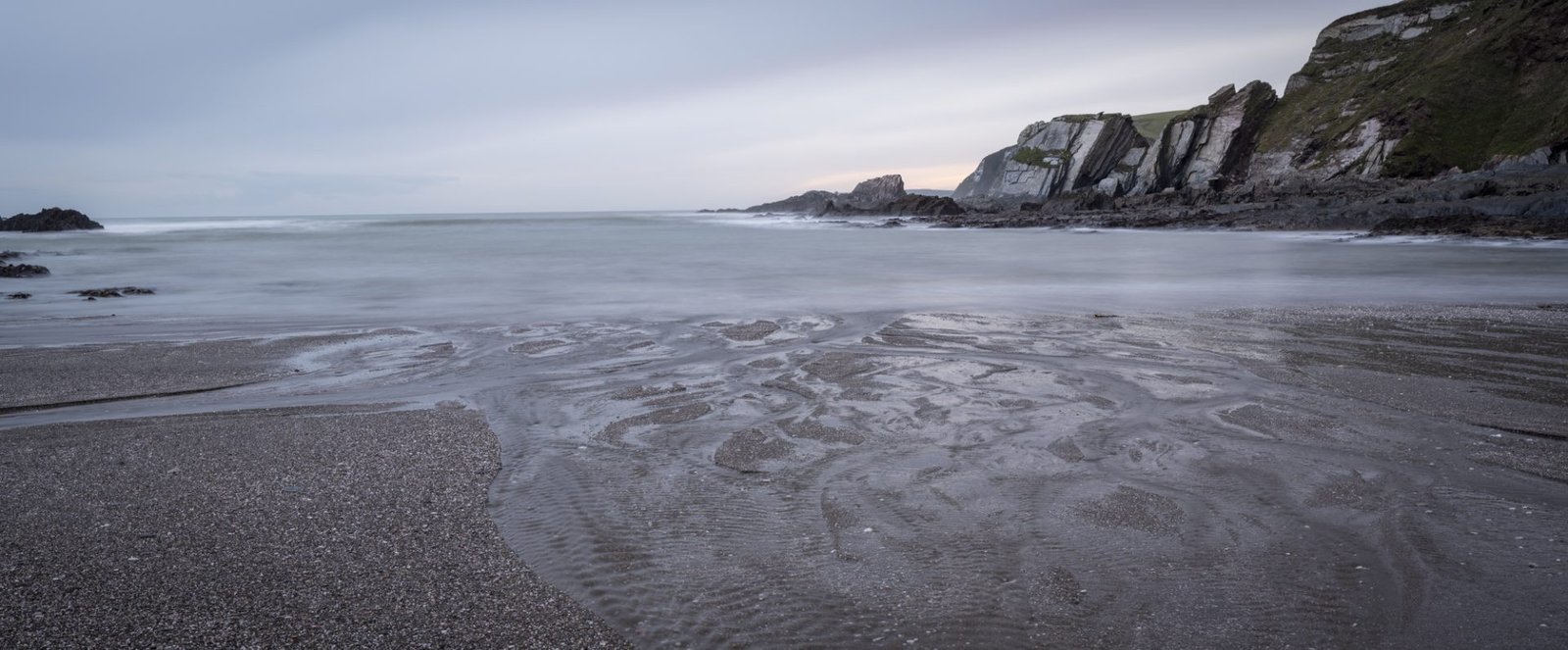
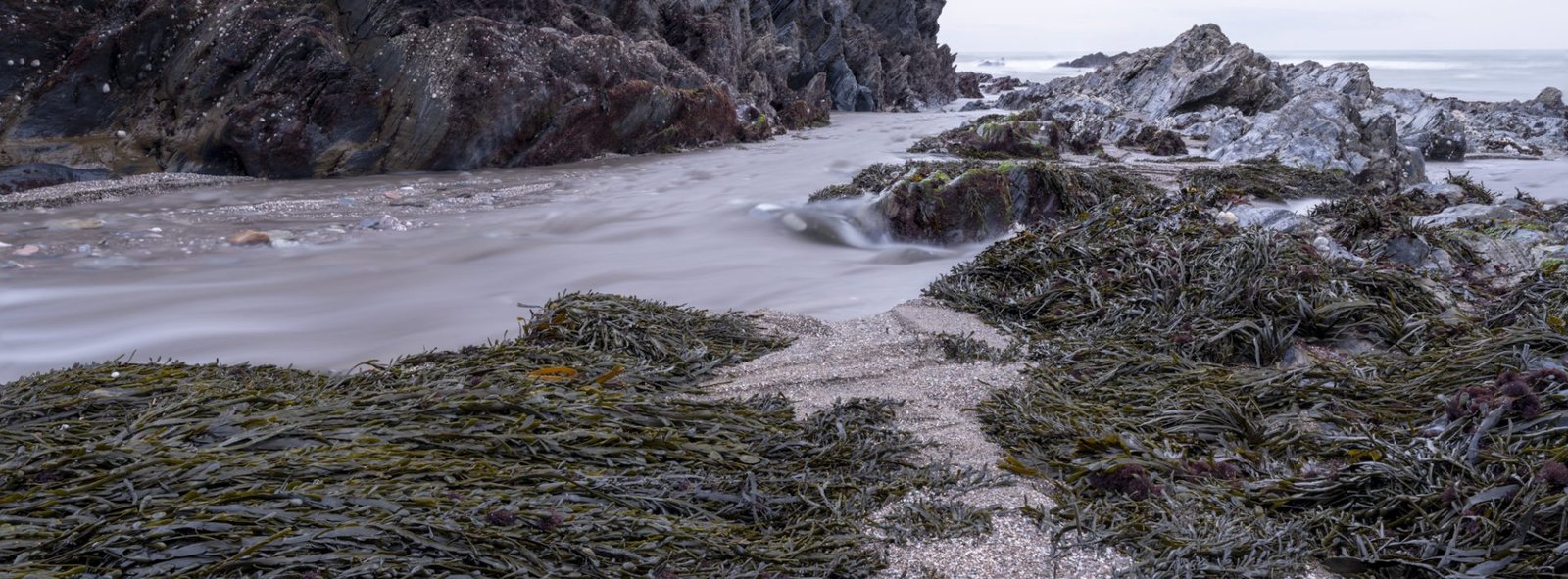
This image captures the rugged beauty of Ayrmer Cove, a secluded gem on the South Devon coast. Taken at low tide, the intricate patterns in the wet sand lead the viewer’s eye toward the misty horizon, where the motion of the sea has been softened by a long exposure, creating an ethereal, dreamlike effect.
The dramatic rock formations rising from the coastline contrast beautifully with the smooth, flowing water, their layered textures revealing the geological history of this wild and unspoiled landscape. The soft, diffused light adds to the tranquil yet moody atmosphere, enhancing the muted tones of the sand, sea, and sky.
Captured with the Fujifilm GFX100S II, this medium format image preserves the finest details, from the delicate ripples in the sand to the rugged cliff face. Ayrmer Cove’s ever-changing tides and weather make it a captivating location for coastal photography, offering endless opportunities to explore light, texture, and movement in the landscape.
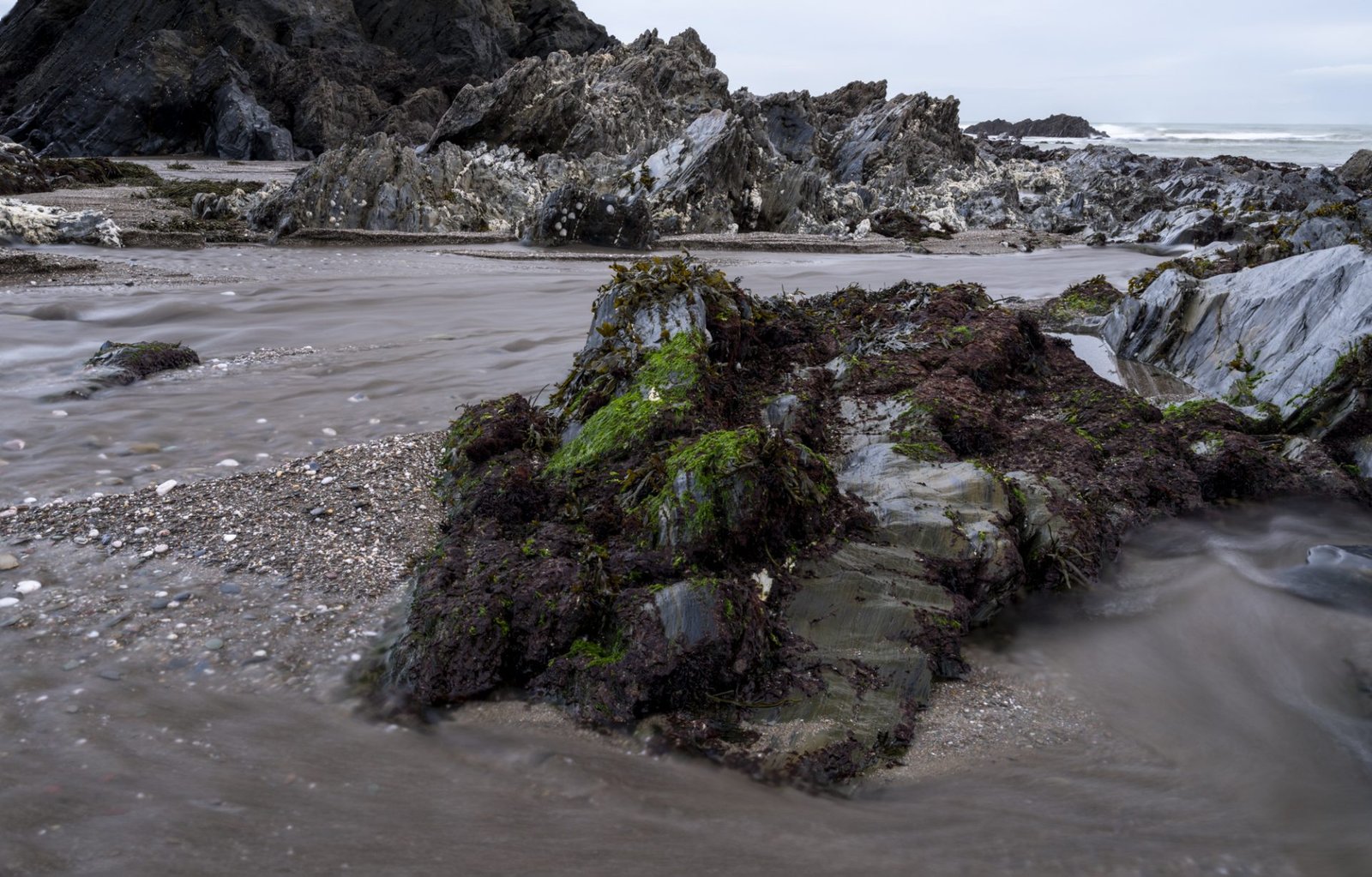
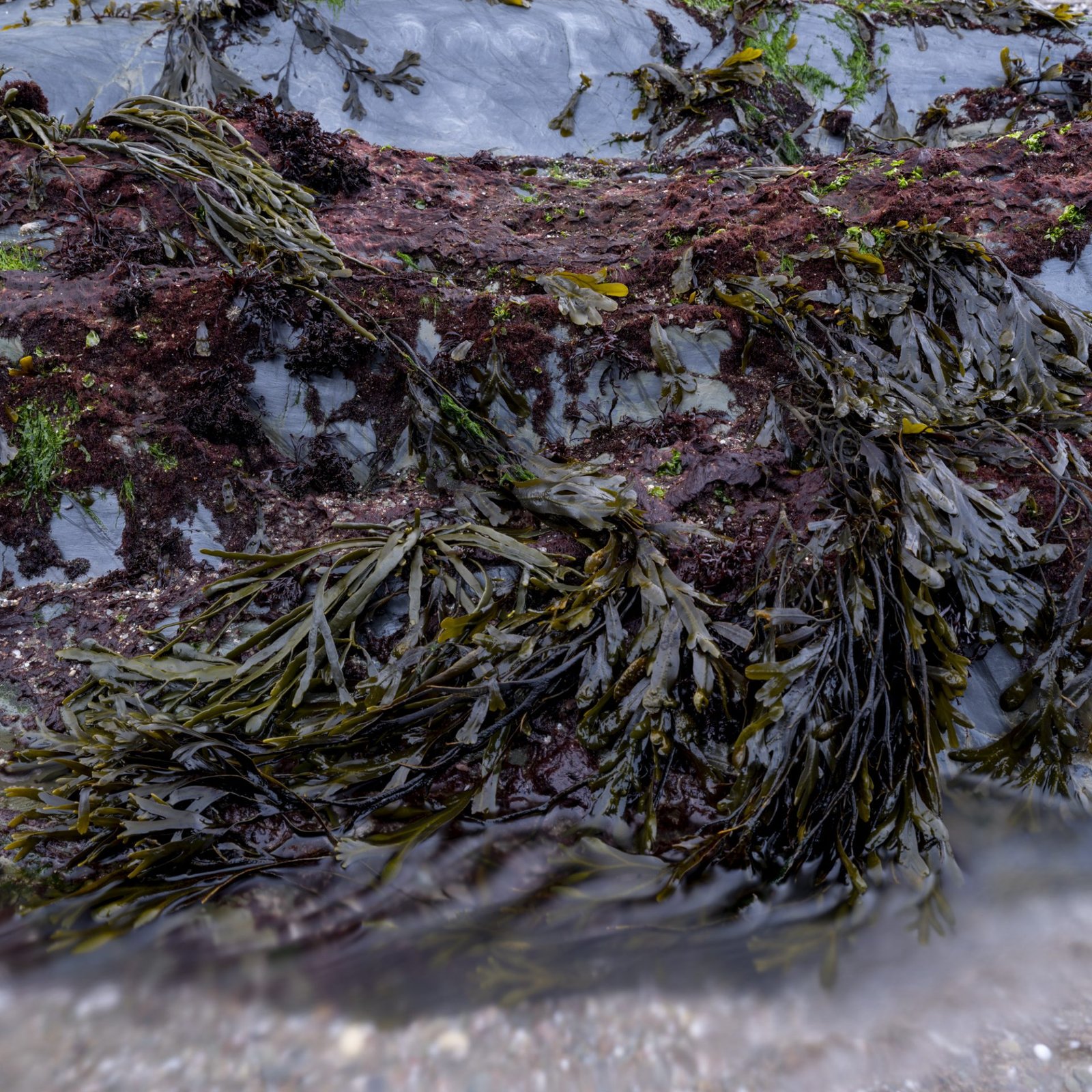
This close-up captures the intricate details of Ayrmer Cove’s intertidal zone, where vibrant seaweed clings to weathered rocks. The deep greens and browns of the wet seaweed contrast beautifully with the textured rock surface, which is rich in red and grey tones, shaped by years of exposure to the relentless tides.
The glossy, tangled fronds of the seaweed glisten with moisture, revealing their organic forms and delicate structures. Small patches of green algae and barnacle-covered stone add further layers of texture, showcasing the dynamic and ever-changing coastal environment.
This image highlights the incredible resolution and tonal depth of medium format photography, allowing every fine detail to be explored. Ayrmer Cove’s shoreline is a haven of natural beauty, offering endless opportunities for abstract and textural coastal compositions.
Sunrise Session: The next morning, I ventured to Burgh Island, hoping for better conditions. Apart from a few dog walkers, I had the beach to myself. The Art Deco Burgh Island Hotel was my main subject, and as the sun rose, it bathed the building in warm golden light. I captured two versions—one in soft pre-sunrise light and another with direct sunlight. Both images showcased the incredible detail and dynamic range of the GFX100S II.
Being able to capture such a high level of detail in these conditions really highlighted the strengths of medium format. The extra resolution allowed me to crop into my images without worrying about losing quality, something I’ve had to be more cautious about with full-frame sensors.
Image Quality: A Step Beyond Full-Frame
This is where the GFX100S II truly justifies its existence. The 102MP sensor delivers an extraordinary level of detail, far surpassing anything I’ve experienced with Nikon’s full-frame cameras, including high-resolution models like the D850 and Z7 II. The sharpness, tonal gradation, and sheer depth of detail in each image make editing a joy.
Dynamic range is another area where the GFX100S II excels. Shadows retain an incredible amount of detail, allowing for heavy lifting in post-production without introducing noise or artefacts. Highlights are also better controlled, making it easier to recover blown-out areas compared to my Nikon full-frame cameras. This has been a game-changer for my landscape photography, where capturing a wide tonal range is critical.
Another standout feature is the colour rendering. Fujifilm’s film simulations are well-known, and they work beautifully on the GFX system. Classic Chrome and Velvia have been my go-to settings, each providing a unique look straight out of the camera.
Autofocus: Faster Than Expected, But Not a Speed Demon
One of my main concerns was autofocus performance. Medium format cameras have a reputation for being slow and cumbersome, but Fujifilm has made huge strides in this area. The GFX100S II is noticeably quicker than its predecessor, and while it doesn’t match the speed of Nikon’s latest Z-series cameras, it’s perfectly adequate for most genres of photography.
Face and eye detection are reliable, though not on par with full-frame flagship models. For landscapes, manual focus with focus peaking is often my preferred method anyway, and the large, bright EVF makes precision focusing a breeze.
Unanticipated Costs When Switching Systems
Switching to a new camera system isn’t just about the body and lens—there are always hidden costs to consider. In my case, I had to purchase new memory cards to take advantage of the GFX100S II’s dual card slots. My existing filters were 82mm, while the GF 35-70mm lens has a 67mm thread, so I picked up a step-up ring to adapt my filters rather than buying new ones.
Another issue is my camera bag, which I’ve grown to dislike. The GFX100S II and lenses require a bit more space, so I’m considering upgrading to a Shimoda Explore 35L. The only challenge is that camera bags really need to be tested in person, and since I live in a remote area with no decent camera shops nearby, I’ll have to make an educated guess before buying online.
Battery life is another factor to consider. While not terrible, the GFX100S II does use more power than my Nikon cameras, meaning I had to invest in additional batteries to ensure I could last through extended shoots.
Final Thoughts: Is the Switch Worth It?
After a month of use, do I regret moving from Nikon full-frame to medium format? Absolutely not. The GFX100S II has opened up new creative possibilities, and the image quality is truly on another level. That said, it’s not a camera for every situation.
If you primarily shoot fast action, wildlife, or need the absolute best autofocus tracking, a high-end full-frame camera will still be the better tool. But if you’re a landscape, portrait, or fine art photographer who values detail, dynamic range, and image quality above all else, the GFX100S II is an incredible option.
Honestly, just being out in the fresh air, waiting for the sun to rise, was the best part of the whole experience. The GFX100S II has not only changed how I shoot but also how I approach photography as a whole. It has encouraged me to slow down, be more intentional, and truly appreciate the craft.
Frequently Asked Questions about the Fujifilm GFX100S II
Is the Fujifilm GFX100S II good for handheld shooting?
Yes, thanks to its excellent in-body image stabilisation (IBIS), the GFX100S II performs well handheld, even with its 102MP sensor. Just be aware that technique still matters—high-res sensors will expose poor form or slow shutter speeds.
Can I use my existing full-frame lenses with the GFX100S II?
No, full-frame lenses aren't directly compatible. The GFX system uses the Fujifilm G-mount. You'll need native GF lenses or use adapters (with limitations). Cropping to avoid vignetting often defeats the purpose of medium format.
Is medium format really that different from full-frame?
Yes and no. For most situations, full-frame cameras offer incredible quality. But medium format, particularly Fujifilm's 44x33mm sensor, provides more subtle tonality, depth, and flexibility for large prints. It shines most when shooting in controlled lighting or for considered landscapes.
How big are the RAW files from the GFX100S II?
Expect compressed RAW files around 70–90MB each uncompressed 16bit comes in around 200mB!. You’ll need ample storage and a fairly powerful computer, especially when working with multiple files in post.
Does the GFX100S II have the same colour science as other Fujifilm cameras?
Yes, it includes the beloved Fujifilm film simulations like Classic Chrome, Velvia, and Acros. It also benefits from newer simulations like Reala Ace, introduced with this generation.
Is the autofocus good enough for moving subjects?
It’s better than previous GFX cameras, but still not on par with top-end full-frame mirrorless systems like Nikon Z8/Z9 or Sony A1. For fast-moving subjects, a GFX camera wouldn't be the first choice.
Is it worth upgrading from the original GFX100S?
If you already own the original GFX100S, the II version is a refinement rather than a revolution. The new processor brings snappier performance, better AF, and Reala Ace film simulation—but the core imaging pipeline is similar.
Can I use this for video?
While capable, the GFX100S II is primarily a stills camera. Video is possible (4K/30p), but most videographers will likely choose smaller-sensor systems with better lens options and more advanced video features.
0 Comments