
Laowa 19mm f/2.8 Zero-D on the Fujifilm GFX100S II – A Real-World Review

There are lenses you buy with your head, and lenses you buy because you already know what you want the images to feel like. The Laowa 19mm f/2.8 Zero-D for Fujifilm GFX firmly sits in the second category.
On paper, it’s a specialist ultra-wide prime with manual focus, no electronic contacts, and a reputation for a few optical quirks. Mounted on the Fujifilm GFX100S II, however, it becomes something far more interesting: a lens that encourages slower, more deliberate photography, while still producing files with enormous scale and presence.
I went into this purchase fully aware of its shortcomings. I didn’t expect perfection. What I was after was perspective — the kind that changes how you approach a scene rather than simply fitting more into the frame.
Why I Chose the Laowa 19mm
Originally, my plan was to buy the Fujifilm GF 20–35mm. On paper, it’s the sensible choice: autofocus, native integration, weather sealing, and the flexibility of a zoom covering the wide end.
In reality, I couldn’t justify the cost at the present time.
The 20–35mm is a serious investment, and while I have no doubt it’s an excellent lens, I knew I wouldn’t be using it often enough to make that outlay feel comfortable. What I really wanted was something very wide — a focal length that would give me a perspective I simply didn’t already have in my kit, rather than a general-purpose wide zoom.
That’s where the Laowa came in.
I bought the Laowa 19mm used from MPB, which brought the price down to a level that felt far more reasonable for a specialist lens. At that point, the decision became much easier: accept the lack of autofocus and the known compromises, and gain access to a genuinely dramatic ultra-wide view on medium format.
This wasn’t a compromise purchase. It was a deliberate one.
I knew what the lens couldn’t do. I bought it anyway. And so far, I’ve been very happy with the images I’ve got out of it.
Build Quality and Handling
One of the first surprises with the Laowa 19mm is its size. Despite covering the GFX sensor, it’s relatively compact and reassuringly solid. There’s no plastic feel here — just metal, glass, and mechanical simplicity.
There’s no autofocus motor, no stabilisation, and no electronics to speak of. Everything is manual. The focus ring has a smooth, well-damped throw, and the aperture ring clicks positively, making it easy to adjust by feel without taking your eye away from the scene.
Mounted on the GFX100S II, balance is excellent. The camera body has enough grip and weight that the lens never feels awkward or front-heavy. In fact, it feels almost deceptive: a 100MP medium-format camera that’s genuinely comfortable to carry on long walks.
Manual focusing on the GFX system is also far less intimidating than many people assume. Focus peaking is clear and accurate, and the ability to punch in for critical focus makes the whole process calm and controlled rather than stressful.
Field of View: The Real Reason This Lens Exists
Nineteen millimetres on medium format is properly wide. This isn’t just “a bit wider than usual” — it fundamentally changes how scenes are rendered.
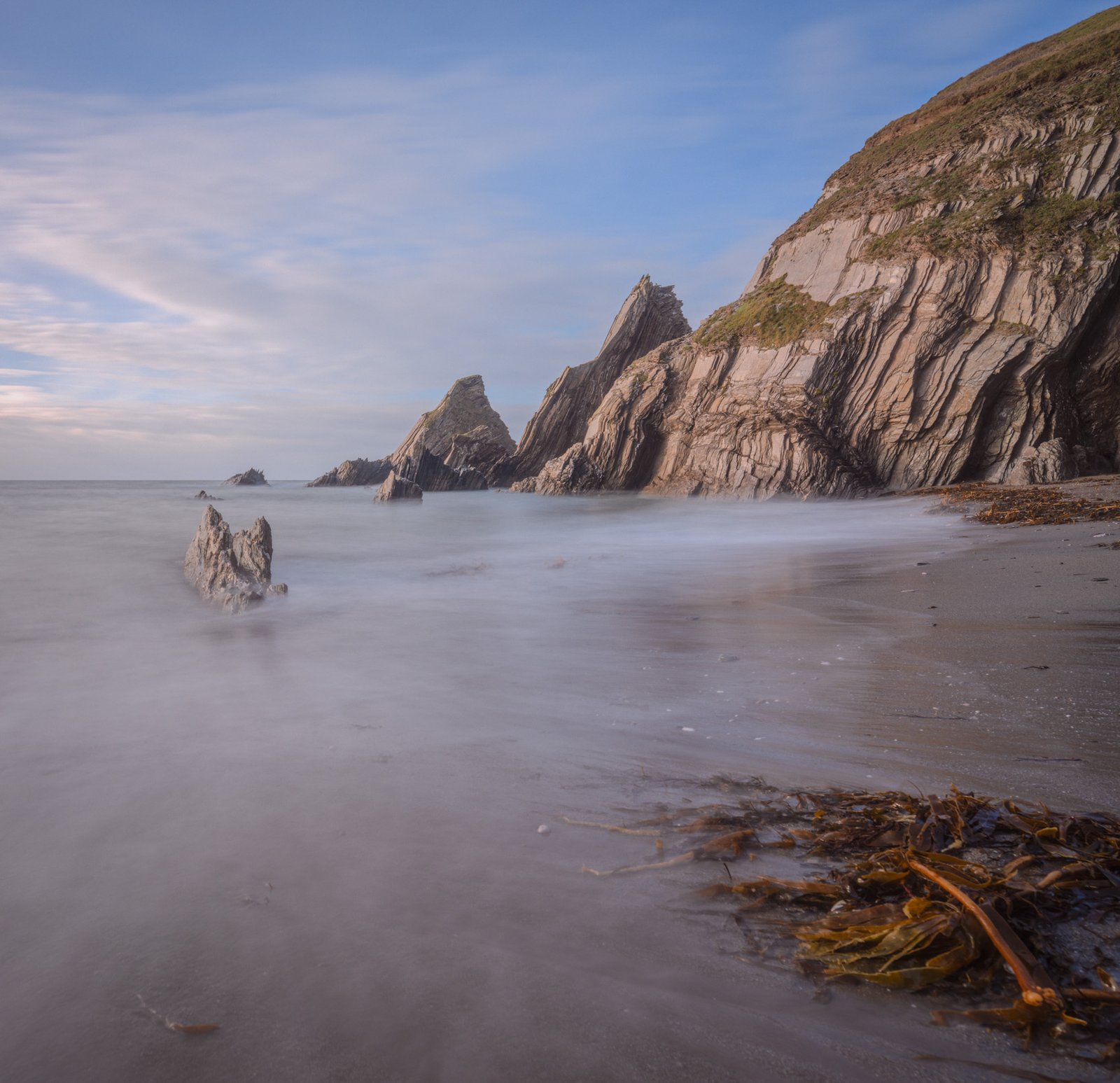
Woodland paths suddenly feel spacious rather than cluttered. Coastlines gain depth and scale without feeling squeezed. Interiors become believable spaces rather than a collection of corners stitched together by perspective tricks.
That said, wide doesn’t automatically mean better. This lens will happily include everything, which means it will also happily include distractions. The Laowa 19mm rewards intentional composition: strong foregrounds, clean lines, and a clear visual anchor.
It also encourages you to get closer — often much closer — than you normally would. If you stand back and shoot as if it were a standard wide-angle, subjects can quickly become insignificant. Step forward, find a foreground element, and let the lens exaggerate depth. When you do, the images start to feel purposeful rather than accidental.
Sharpness and Rendering on a 102MP Sensor
The GFX100S II is an unforgiving camera. It will show you exactly what a lens is doing — good and bad — without any polite smoothing of the edges.
Centre sharpness on the Laowa 19mm is strong, especially once stopped down slightly. At f/5.6 to f/11, it’s more than capable of producing detailed landscape files that hold up beautifully at large sizes.
Wide open at f/2.8, things are a little softer, particularly towards the edges. This isn’t a lens designed to impress at 200% magnification across the entire frame. Instead, it has a slightly more organic rendering than modern autofocus glass — something that feels more photographic than clinical.
Corner performance improves noticeably as you stop down, and for the kind of work this lens is best suited to — landscapes, architecture, environmental scenes — that’s rarely a problem.
Distortion and the “Zero-D” Claim
Laowa’s “Zero-D” branding doesn’t mean no distortion, but it does mean well-controlled distortion. Straight lines remain convincingly straight, especially compared to many ultra-wide lenses that subtly bend reality in ways you only notice once you start editing.
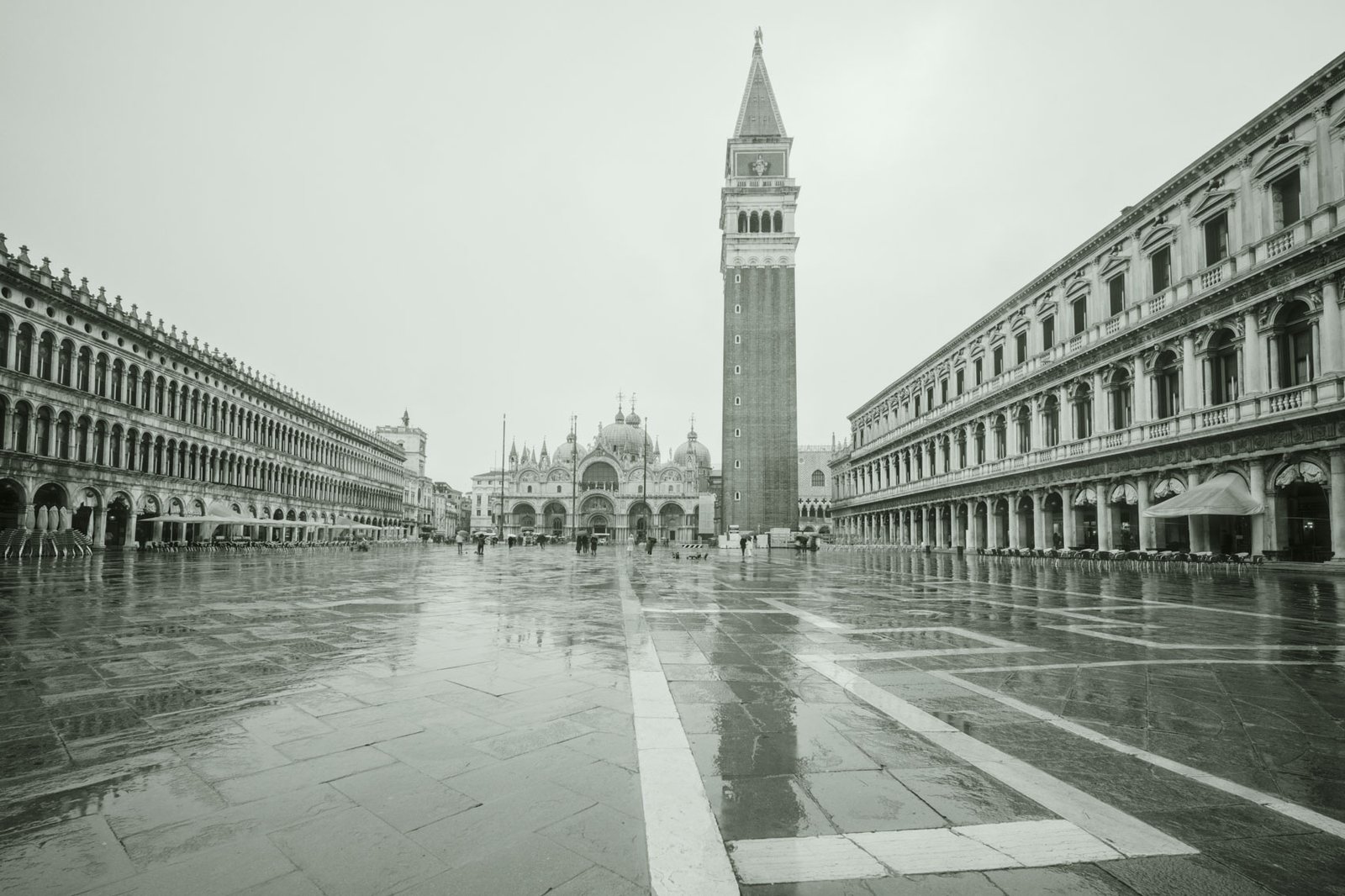
For architecture and interiors, this matters. You’re not fighting the lens as much in post. You’ll still need to correct perspective if you tilt the camera — that’s geometry rather than distortion — but the lens itself stays honest.
For landscapes, it means horizons behave themselves and rock formations don’t feel unnaturally stretched.
Vignetting, Colour, and Contrast
Vignetting is present, particularly at wider apertures. How much that bothers you will depend on your style. For moody monochrome work, the natural fall-off can actually help draw the eye inward. For bright skies or clean colour work, it’s something you’ll likely correct in post.
Colour rendering is neutral to slightly cool, with good contrast when the light behaves. Combined with the GFX files’ flexibility, it’s easy to shape the look without the image falling apart.
Flare and Shooting Into the Light
This is one of the lens’s more obvious weaknesses. Strong light sources near the edge of the frame can produce flare — sometimes attractive, sometimes distracting.
You quickly learn how the lens behaves: shading the front element with your hand, adjusting angles slightly, or simply choosing when to embrace flare rather than fight it. Like much about this lens, it rewards a slower, more considered approach.
Manual Focus in Real Use
Manual focus on a 100MP camera sounds intimidating, but in practice it’s often liberating. Depth of field at 19mm is generous, and for many landscape scenes you can focus once and shoot with confidence, especially when stopped down.
Where precision matters most is when you’re deliberately placing focus on a close foreground element — moss, rocks, textures. Here, the resolution of the GFX100S II makes accuracy important, but also makes it easy to check.
A tripod helps, but the camera’s stabilisation means hand-held shooting is perfectly viable when conditions allow.
Where the Laowa 19mm Excels
-
Dramatic landscapes with strong foregrounds
-
Environmental images that emphasise place and space
-
Minimalist compositions using scale and negative space
-
Architecture and interiors where distortion control matters
Where It Falls Short
-
Corner-critical work wide open
-
Fast-moving subjects
-
Shooting directly into strong light without careful framing
Final Thoughts
The Laowa 19mm f/2.8 Zero-D isn’t a lens for everyone. It’s manual, it has quirks, and it doesn’t pretend to be technically perfect.
What it does offer is something arguably more valuable: a genuinely different way of seeing on medium format.
I bought it knowing its shortcomings, partly because I couldn’t justify the cost of the Fujifilm 20–35mm at the time, and partly because I wanted a lens that would push me into new compositions rather than sit comfortably within familiar ones.
So far, it’s done exactly that.
On the GFX100S II, the Laowa 19mm feels like a creative tool rather than a technical solution — and for the kind of photography I enjoy, that’s exactly what I was looking for.
0 Comments