
Long Exposure Photography at Ayrmer Cove: Battling the Elements on the South Devon Coast
Stormy skies, crashing waves, and a stubborn gout flare-up didn’t stop me from revisiting Ayrmer Cove in South Devon. Armed with the Fujifilm GFX100S II, K&F filters, and plenty of lens cloths, I captured long exposure seascapes despite wind, rain, and even seawater-filled boots. While nothing beats shooting film on my Nikon F501 SLR, Dehancer Pro gave my digital images a convincing film-like finish. Cold, wet, and limping, I was still happy—because sometimes the best photos are born from the toughest conditions.
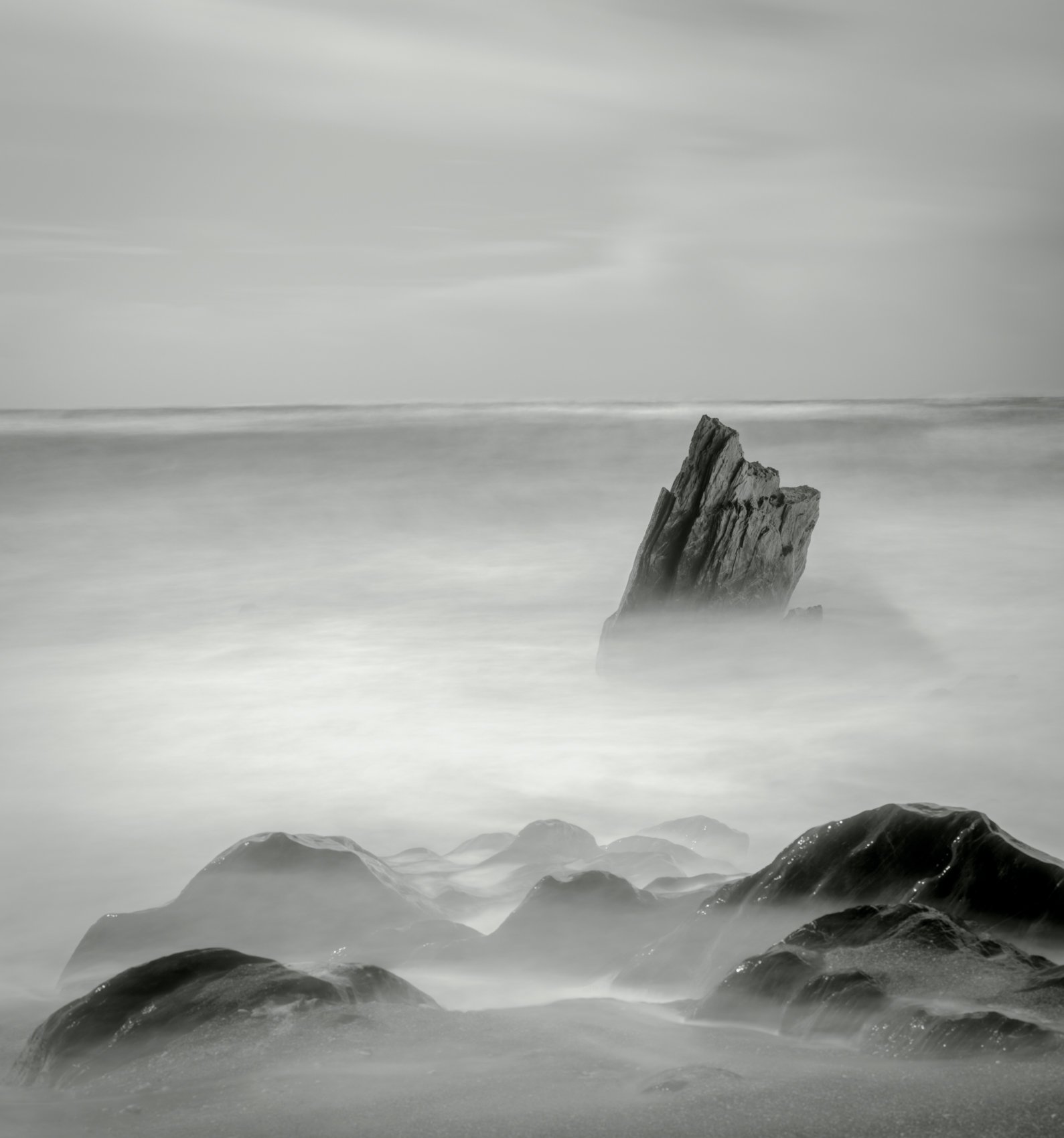
Battling the Elements at Ayrmer Cove: Long Exposure Photography on the South Devon Coast
Photography trips rarely go exactly as planned. Sometimes it’s the weather, sometimes the equipment, and other times it’s just life getting in the way. My recent outing to Ayrmer Cove, tucked away on the South Devon coast, was one of those days where everything seemed stacked against me—yet the challenges ultimately made the images all the more rewarding.
I’ll be honest: I wasn’t even sure I’d make it out at all. A painful gout flare-up had kept me housebound for far too long, and although the worst of it was beginning to ease, walking any sort of distance over rough terrain was out of the question. Normally, I’d have headed for Dartmoor, which is my first love photographically. But the thought of uneven ground, climbing over rocks, and trudging up hills made me wince before I even laced my boots.
So I made a different decision. Instead of Dartmoor, I returned to Ayrmer Cove. The walk down to the beach is more level, and while it still requires some effort, it felt like a manageable compromise. Besides, I had unfinished business there: the last time I visited, my Nikon Z50 II had an unfortunate accident and drowned in the waves. Revisiting the same cove felt like a way to reclaim it—not just for my photography, but for my own peace of mind.
Changeable Conditions on the Coast
When I arrived, the conditions were everything a seascape photographer could hope for, and everything that could make the day a logistical nightmare. The sky was constantly shifting, clouds racing overhead to reveal fleeting glimpses of light before slamming shut again. Out at sea, waves rolled in with an intensity that made the shoreline both thrilling and slightly intimidating.
For long exposure photography, this kind of atmosphere is perfect. Fast-moving clouds add streaks to the sky, while crashing waves blur into an ethereal mist. The South Devon coastline, rugged and untamed, always lends itself to dramatic compositions, but on a day like this it felt like the sea itself was performing for me.
The downside, of course, was the wind. Powerful gusts tore through the cove, buffeting my tripod and making every setup a battle. I had brought along my Manfrotto 190XPRO4 tripod, which usually does a fine job, but it simply wasn’t heavy enough to remain stable with the Fujifilm GFX100S II mounted on top. Even with the legs spread wide and braced against rocks, there were moments where I could feel the whole thing tremble. On calmer days I sometimes experiment with focus stacking to extend depth of field, but with conditions like this, the risk of movement between frames was just too high.
Rain, Rocks, and Rogue Waves
If the wind wasn’t enough, the rain made sure to keep me humble. Every so often, the heavens would open and torrential rain would hammer down, leaving me scrambling for shelter. At Ayrmer Cove, “shelter” means crouching behind whatever large rock you can find, hunching into your waterproofs, and hoping your gear doesn’t get too wet.
Thankfully, I’d come prepared. My waterproof coat, quick-drying trousers, and a generous stash of lens cloths were lifesavers. Every time the rain eased, I’d have to wipe away the fine spray that coated the filters and front element of my lens. Shooting seascapes means accepting that you’ll spend half your time cleaning glass, but in weather like this it became almost comical.
Just to add insult to injury, one particularly bold rogue wave surged further up the beach than expected, filling my walking shoes with seawater. Normally, I’d have worn wellies for a coastal shoot, but with my gout still flaring, the thought of squeezing into those unforgiving rubber boots was too painful. The irony was that my walking shoes are waterproof—excellent for keeping water out, but equally excellent at keeping it in once it’s managed to flood inside. I spent the rest of the day with the sound of water sloshing around with every step.
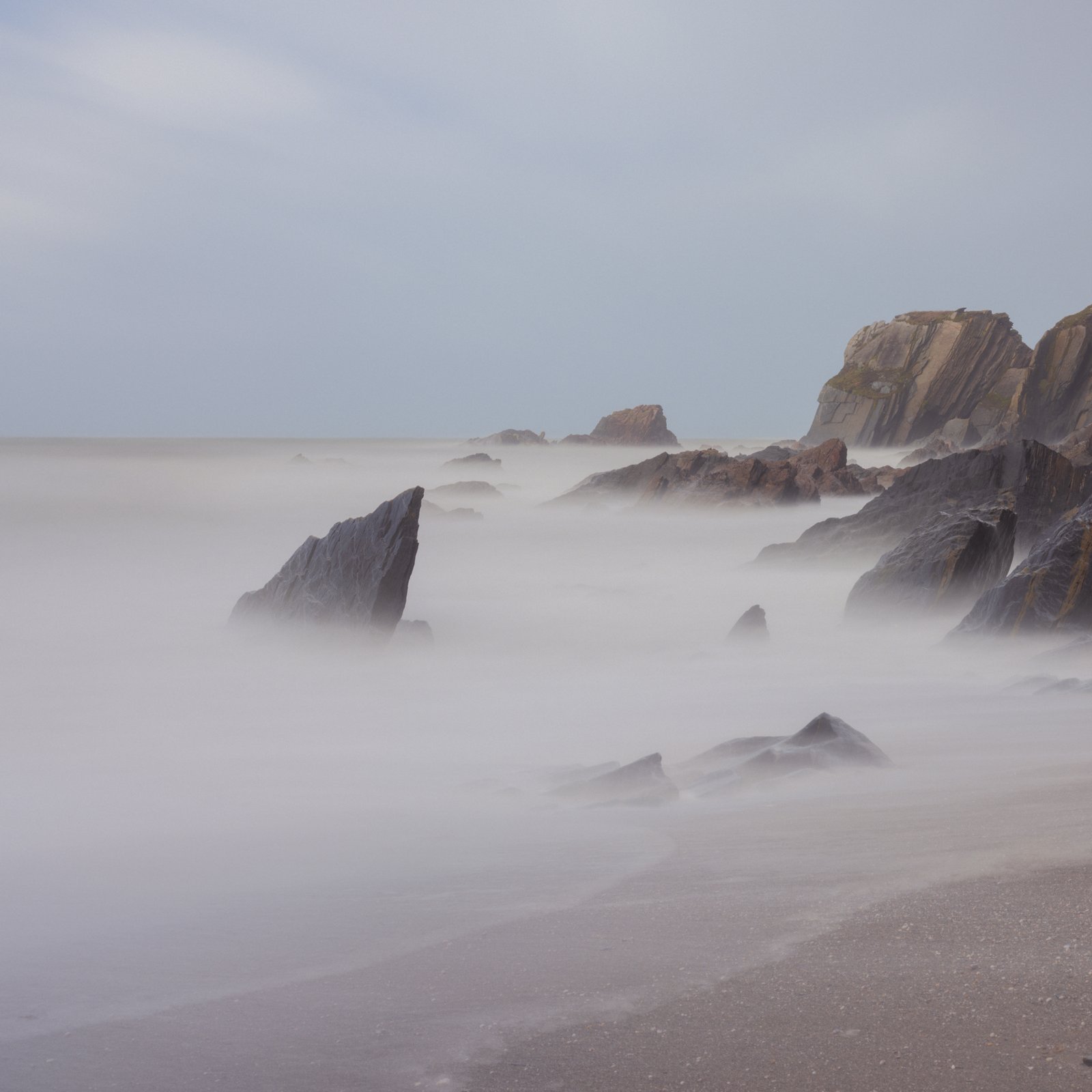
Technical Approach: Filters and Exposures
Despite the conditions—or perhaps because of them—I managed to capture some images I’m really pleased with. To create the long exposure effects, I used my K&F Concept magnetic filter system. A 10-stop neutral density filter was essential to slow the shutter speed down enough to turn crashing waves into a silky haze.
On top of that, I stacked a K&F circular polariser (CPL), which helped cut through glare on the water and added a richness to the tones. Exposure times varied between 30 seconds and two minutes depending on the light. At those lengths, the sea transformed: foam became smoke, spray became mist, and the whole cove took on an ethereal quality that’s impossible to see with the naked eye.
One of the joys of long exposure photography is precisely this ability to reveal hidden worlds. Standing there, buffeted by wind and soaked to the skin, I knew I was capturing something different from the reality I was experiencing. The camera was distilling chaos into calm, creating a dreamlike version of Ayrmer Cove that existed only in those exposures.
Post-Processing: Digital Meets Film
Back in the warmth of home, the real work began: editing. My workflow started in Adobe Lightroom, where I handled the basics—exposure adjustments, contrast, and correcting for any colour casts introduced by the filters.
But the real magic came when I ran the images through the Dehancer Pro plugin. For those unfamiliar, Dehancer is designed to emulate classic film stocks, complete with grain, halation, and subtle colour shifts. For me, this adds a tactile quality to digital images, bridging the gap between the clean precision of a modern sensor and the imperfect beauty of film.
Of course, the only way to get a true film look is to actually shoot film. I still occasionally use my Nikon F501 SLR, and there’s nothing quite like the character of genuine negatives. But I’ll admit—shooting film can be a pain in the arse. From sourcing rolls, to processing, to waiting for scans, it’s a much slower process than digital. That’s where Dehancer Pro shines. It does a pretty good job of recreating that film-like look in a way that’s sometimes difficult to achieve within Lightroom alone. It’s not a perfect substitute, but it’s close enough that I often find myself satisfied without the hassle of chemicals and darkrooms.
For this set, I experimented with a few different stocks. Some suited the moody greys and blues of the stormy sky, while others added warmth to the rocks and softened the edges of the sea spray. What I like about Dehancer is that it doesn’t feel like a gimmick—it genuinely changes the character of an image in a way that feels authentic, not artificial.
Reflections on the Day
Looking back, it’s hard to say whether the conditions made the day harder or more rewarding. On the one hand, I was wet, cold, and limping from gout, with seawater sloshing in my shoes. On the other hand, the weather gave me everything I could have asked for in terms of drama.
There’s a lesson here, I think, about embracing imperfection. As photographers, it’s easy to imagine the “perfect” conditions: golden light, calm wind, cooperative clouds. But often, it’s when things go wrong that the most interesting images emerge. Ayrmer Cove that day was wild, unpredictable, and uncomfortable—but it was also alive. While I was very wet and very cold, I was also very happy. The combination of physical struggle and creative reward made the whole experience unforgettable.
Would I have preferred dry socks? Absolutely. But would I trade the images I captured for a more comfortable outing? Not a chance.
Tips for Photographing in Harsh Coastal Conditions
If you’re planning your own trip to the coast for long exposure photography, here are a few lessons from my soggy adventure:
-
Bring more lens cloths than you think you’ll need. Spray and rain are relentless, and nothing ruins an image faster than water droplets on the filter.
-
Invest in sturdy footwear. Wellies are great for shallow water, but make sure they’re comfortable enough for longer wear. Waterproof walking shoes are excellent until a rogue wave proves otherwise.
-
Weight your tripod. If your tripod has a hook, hang a bag of rocks or sand to stabilise it in strong wind. My lightweight tripod struggled with the GFX100S II, and I regretted not bringing extra weight.
-
Know when to give up on certain techniques. Focus stacking is brilliant in calm conditions, but if the wind is constantly shifting your setup, it’s better to accept limitations and work with them.
-
Protect yourself as well as your gear. A waterproof coat, quick-drying trousers, and gloves make miserable weather more bearable. Remember: if you’re uncomfortable, you’ll rush, and your images will suffer.
Conclusion
Ayrmer Cove tested me in every way—physically, technically, and creatively. But it also reminded me why I love photography in the first place. It’s not about perfect conditions or perfect comfort; it’s about engaging with the world as it is, messy and unpredictable, and finding beauty within it.
Long exposure seascapes have a way of stripping away the chaos of the moment and revealing something timeless. As I looked at the final images—waves reduced to mist, clouds stretched into whispers—I saw not just a record of Ayrmer Cove, but a reflection of persistence: of pushing through discomfort, embracing uncertainty, and trusting the process.
Sometimes, the best photographs aren’t the ones you planned, but the ones you fought hardest to make.

Want to Try These Filters?
I used the K&F Magnetic ND Filter Set and they held up beautifully, even on a 102MP sensor.
0 Comments