
Capturing the Enchantment of Wistman’s Wood: A Photographic Journey
Wistman’s Wood in Dartmoor offers a magical, ancient landscape for photographers, but it’s also a fragile, protected environment. My recent trip resulted in four captivating images, using both a 200mm lens and a vintage Helios 44-2 58mm lens. Photographers must act as custodians of such places by following ethical guidelines, sticking to paths, and supporting conservation efforts like those promoted by Nature First. It’s a 30-45 minute hike to reach the woods, and the environment should be respected to preserve its unique beauty for future generations.
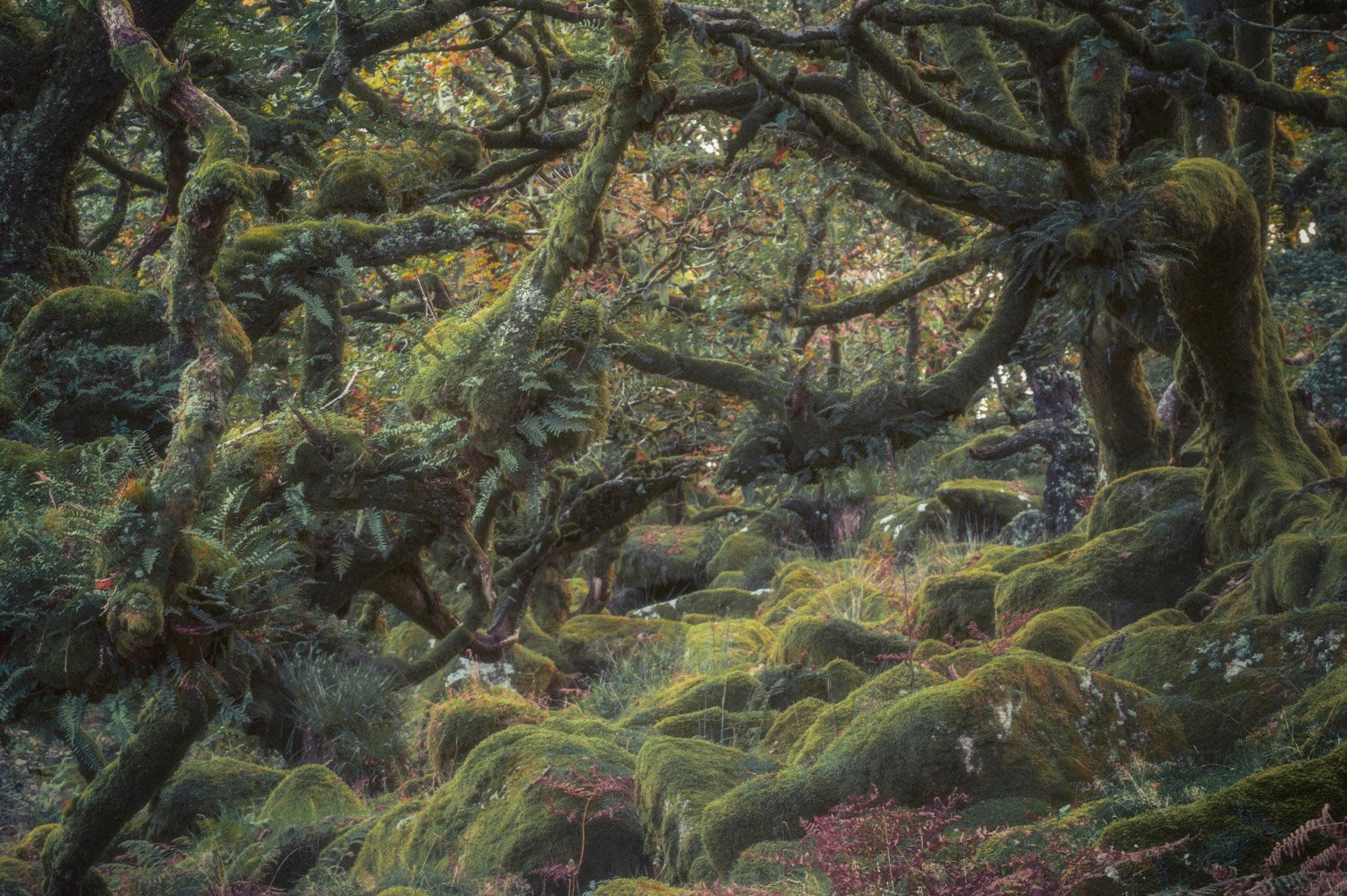
Nestled in the heart of Dartmoor National Park, Wistman’s Wood is a place of ancient wonder. This mystical oak woodland is home to twisted, gnarled trees, shrouded in moss and ferns, creating a scene that feels almost otherworldly. Recently, I had the pleasure of visiting this fragile and protected environment, and I came away with four images that I’m thrilled to share.
The Journey to Wistman’s Wood
The journey to Wistman’s Wood begins with a hike of 30-45 minutes from the closest car park at Two Bridges. The walk takes you through the rugged beauty of Dartmoor, offering expansive views of the moorland and the surrounding hills. As you approach the wood, there’s a palpable change in the atmosphere. The trees stand as ancient guardians, their branches intertwining above your head, casting shadows on the mossy rocks below.
Wistman’s Wood is a site of Special Scientific Interest (SSSI), which means it’s protected for its unique flora and fauna. This is a reminder of how delicate these ecosystems are and why visitors must respect the land. It’s important to walk around the woods, not through them, to avoid disturbing the natural landscape. The site is home to rare lichens, mosses, and the trees themselves, some of which are believed to be over 400 years old. The National Trust and Dartmoor National Park Authority have been keen to protect this beautiful yet vulnerable environment, and as photographers, it’s our duty to tread lightly, leaving nothing but footprints.
The Beauty of Chaos: Capturing the Woods with a 200mm Lens
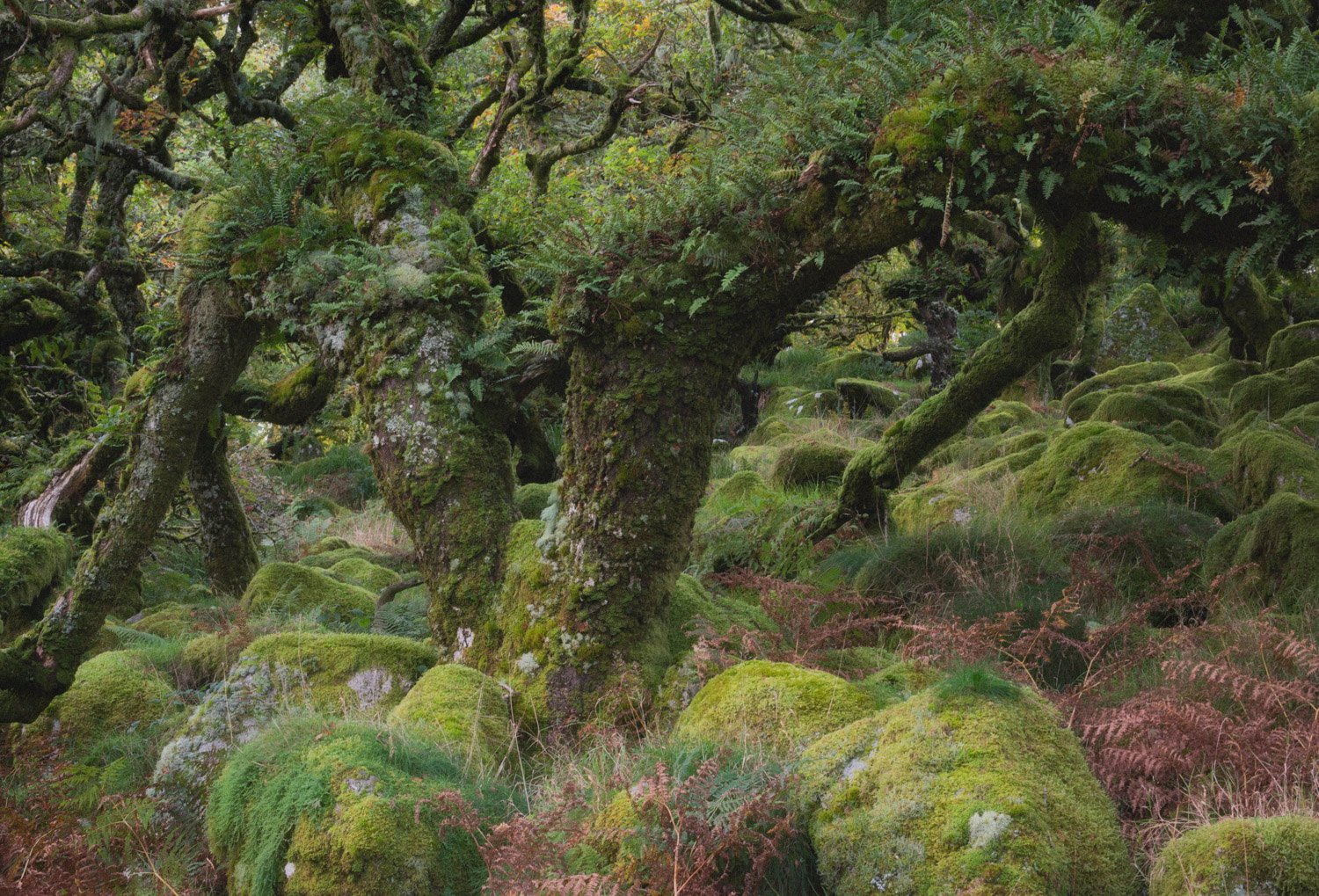
One of the key challenges in photographing Wistman’s Wood is capturing the chaos of the woodland in a way that evokes its magic without overwhelming the viewer. For two of my images, I used a 200mm lens mounted on a tripod to isolate sections of the woodland. This longer focal length allowed me to compress the scene, bringing together the tangle of branches, moss-covered rocks, and shafts of light filtering through the leaves.
The 200mm lens helped me focus on smaller compositions within the larger chaos of the woods. By narrowing the field of view, I could draw attention to the intricate patterns formed by the tree limbs and the vibrant textures of the moss and ferns. I wanted these images to reflect the dense and almost claustrophobic beauty of Wistman’s Wood while still retaining a sense of calm amidst the chaos.
Exploring the Wood’s Magic with a Vintage Lens: Helios 44-2 58mm
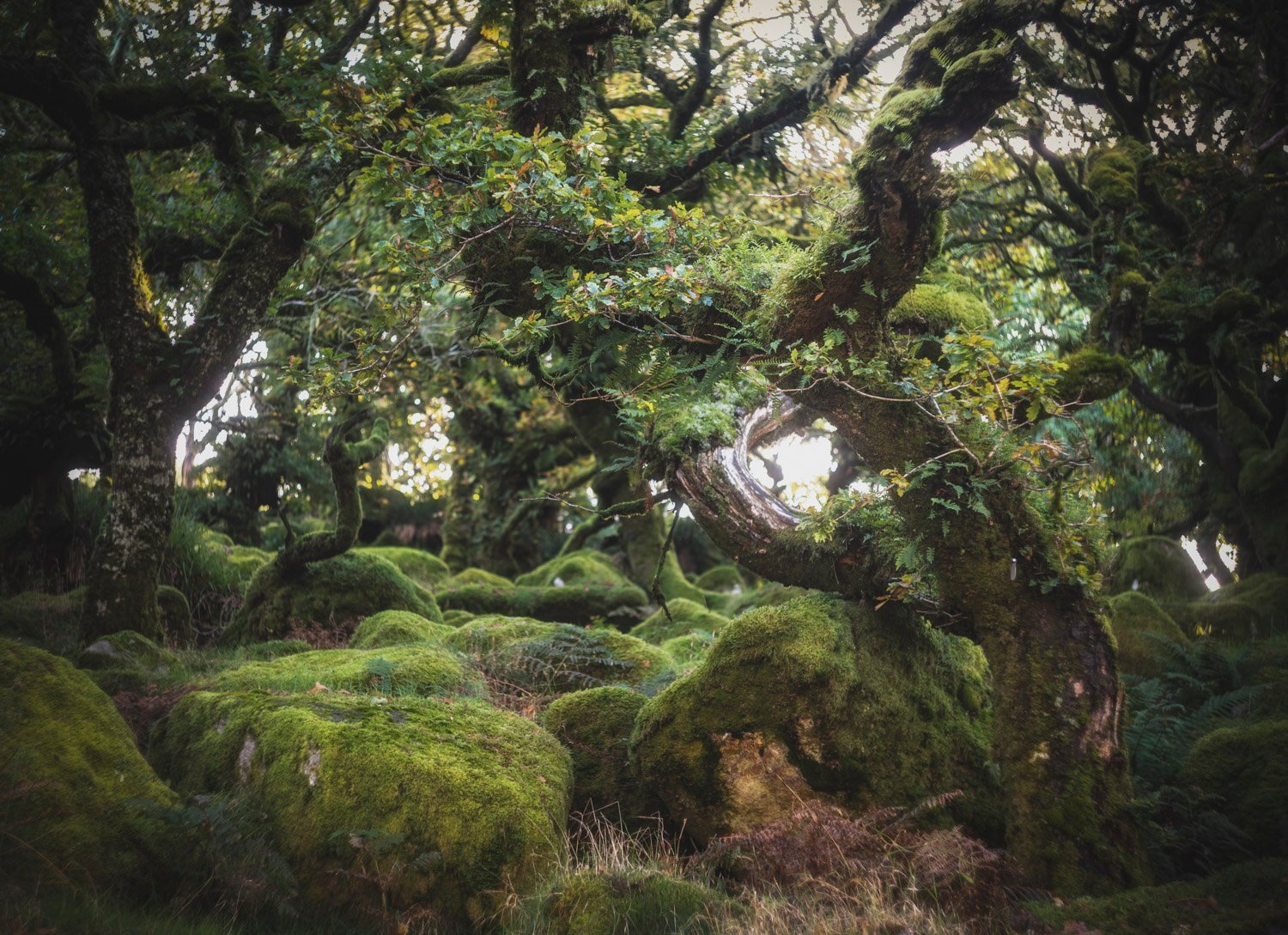
For the third image, I reached for one of my favourite lenses, the vintage Helios 44-2 58mm. Known for its distinctive swirly bokeh, this lens added a touch of dreaminess to the scene. The softness of the background contrasted beautifully with the sharpness of the foreground details, creating a sense of depth and mystery.
This image captures the woodland in a way that feels slightly ethereal as if the forest is not entirely of this world. The Helios lens, with its unique rendering, gave the trees and foliage an almost mythical quality, which felt fitting given the legends surrounding Wistman’s Wood. The woods are steeped in folklore, often said to be haunted or home to supernatural beings, and the Helios allowed me to hint at that sense of magic.
Lone Tree in Changing Weather: Capturing the Drama of Dartmoor
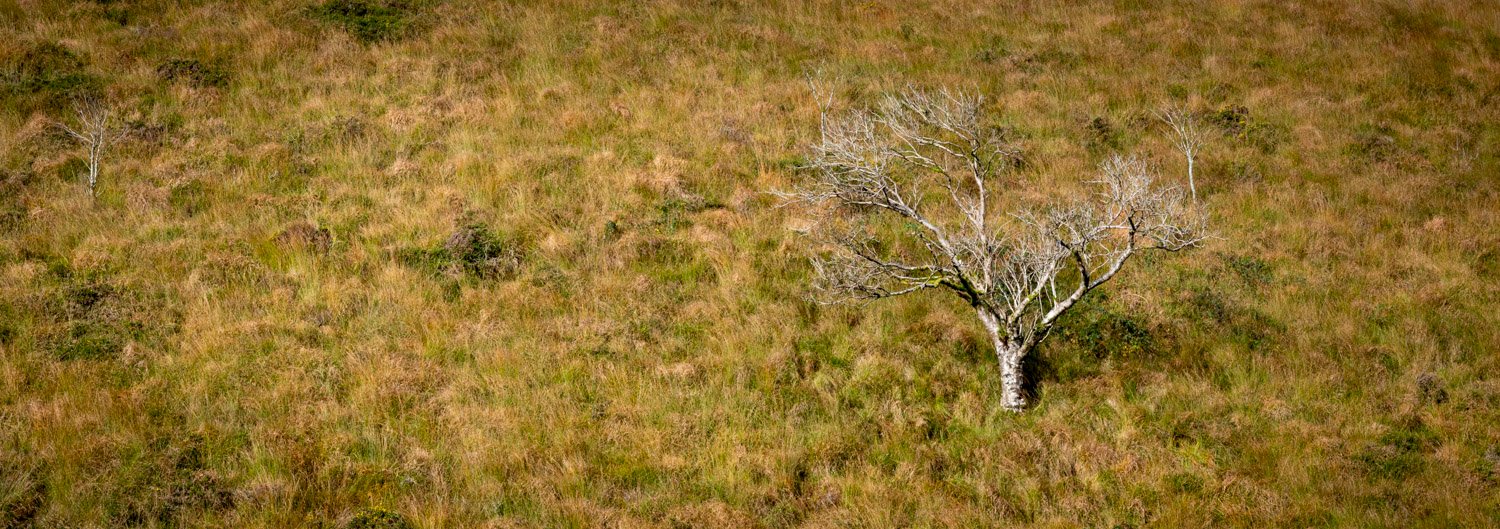
The weather on Dartmoor is notoriously changeable, and during my visit, I experienced this firsthand. As the light began to shift and clouds rolled in, I turned my attention to a lone tree standing on the hillside opposite Wistman’s Wood. With a brooding sky and the wind picking up, the scene felt dramatic and atmospheric – a perfect moment to capture.
This final image contrasts with the dense woodlands, focusing on a solitary figure in the landscape. The lone tree, battered by the elements, stands resilient against the backdrop of Dartmoor’s moors. It’s a reminder of the harsh conditions these trees endure, and yet they continue to thrive. Dartmoor’s rugged beauty is part of what makes it such a special place for photographers, offering moments of drama and stillness in equal measure.
Protecting Fragile Environments: Our Role as Photographers
Wistman’s Wood is not just a beautiful location – it’s a fragile environment that requires our protection. As photographers, we have a responsibility to act as custodians of the places we capture. That’s why I want to take a moment to highlight the important work being done by Nature First. This organisation promotes ethical practices in nature photography, encouraging photographers to respect and protect the environments they document. You can learn more about their principles and their mission at NatureFirst.org.
It’s easy to get caught up in the excitement of capturing a beautiful landscape, but it’s important to remember that we must always prioritise the environment's well-being. Wistman’s Wood is a prime example of a location where human impact can cause lasting damage. The ecosystem is incredibly delicate, and off-path foot traffic can disturb the soil, damage plants, and disrupt wildlife. Dartmoor has been under increasing pressure from tourism, and as the popularity of these natural spaces grows, so too does the need for responsible behaviour.
The photography community can play a significant role in conservation efforts by advocating for responsible practices, educating others, and adhering to ethical guidelines. That’s why it’s vital that we support organisations like Nature First and spread the message of conservation. When visiting places like Wistman’s Wood, always stick to designated paths, avoid disturbing wildlife, and consider the long-term impact of your presence.
Final Thoughts: A Delicate Balance of Beauty and Responsibility
Wistman’s Wood is a place of immense beauty, history, and ecological significance. My recent visit reminded me of how important it is to approach these spaces with respect and care. The images I captured represent not just the beauty of Dartmoor but also the delicate balance that exists between nature and those who visit it.
Whether you’re a photographer, hiker, or nature enthusiast, we all share the responsibility of preserving these wild places for future generations. Let’s continue celebrating their beauty, but always with an eye toward conservation and protection.
Watch the behind the scenes video I shot on my last visit to Wistmans Wood.
0 Comments