
First Light of 2026: Westcombe Beach and a New Lens
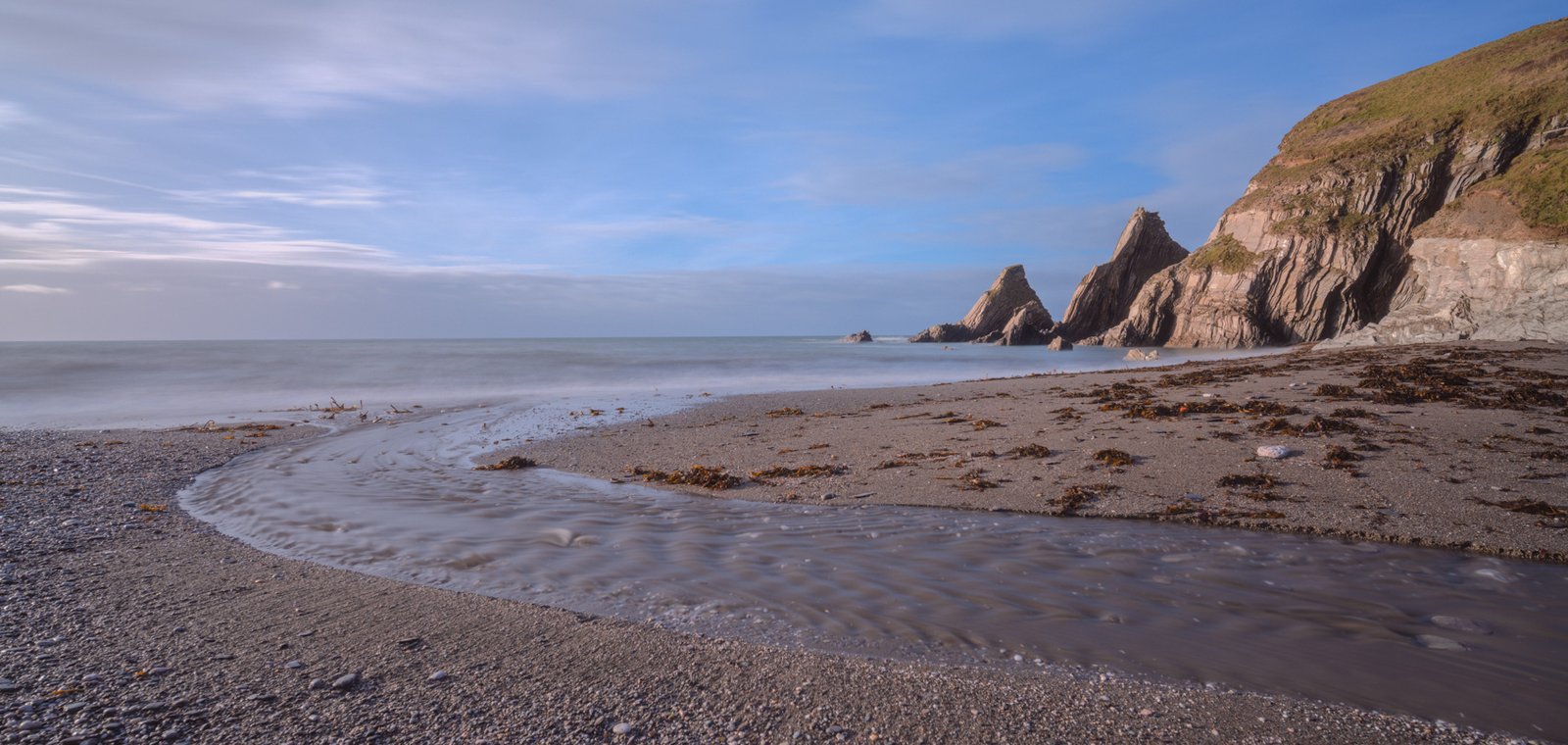
The first shoot of a new year always carries a little extra weight. Not because the images matter more than any others, but because they quietly set the tone. For me, the first outing of 2026 wasn’t about chasing dramatic light or ticking off a location. It was about walking, looking, and spending time with a new lens in a familiar stretch of coastline — letting both settle without pressure.
This short trip took me to Westcombe Beach, a quieter neighbour to Ayrmer Cove and a place that rewards effort more than spectacle.
The Walk In
I parked at the Ringmore car park, the same place I usually leave the car when heading down to Ayrmer Cove. From there, the route feels well-worn — the path drops gently toward the sea, with glimpses of blue opening up between hedges and stone walls.
But Westcombe Beach isn’t reached by accident.
From Ayrmer Cove, I followed the South West Coast Path west for roughly half a mile. The path climbs quickly and steeply, gaining height in a way that makes you aware of the landscape rather than simply passing through it. I was glad I’d worn proper walking shoes — the sort of practical detail that only really matters once you’re halfway up a hill with a camera on your back.
At the top, the view opens briefly before the land falls away again. Eventually the beach appears below, framed by steep, folded rock faces that feel more geological than picturesque. Even before taking a camera out of the bag, it’s clear this is a place defined by structure rather than softness.
Late Morning Light and Quiet Expectations
This wasn’t a dawn shoot. I arrived late morning, sometime between ten and midday, with the sun already well above the horizon. There was blue sky and broken cloud, the kind of conditions that suggest potential without ever quite committing to it.
The light never became dramatic. The clouds didn’t build or break in any meaningful way. There were no sudden shafts of light or moments that demanded urgency.
And that was fine.
Not every shoot needs to revolve around anticipation. Sometimes it’s enough to work with what’s there — especially in places like Westcombe, where the landscape carries its own weight regardless of what’s happening above it.
A New Lens, With No Illusions
This outing was also an opportunity to spend time with the Laowa 19mm mounted on my Fujifilm GFX100S II. I bought the lens knowing exactly what I was getting into.
-
Manual focus only
-
No electronic connections
-
No EXIF data
-
Slight softness wide open
None of those limitations came as a surprise, and none of them were deal-breakers. This wasn’t meant to be a technical review, and not all of the images from the beach were taken with this lens. Instead, this was about seeing how it behaved in a real landscape, under real conditions, without expectations of perfection.
What stood out immediately was how intentional the shooting process felt. Manual focus changes your relationship with the scene. It slows you down, encourages small adjustments, and removes the temptation to overshoot. The lack of EXIF data reinforces that — there’s nothing to analyse later, no numbers to justify decisions. You either like the image or you don’t.
That felt refreshing.
Working Wide Without Overstatement
At 19mm on medium format, the field of view is expansive but not exaggerated. It gives space without pushing the scene into distortion, provided you’re careful with composition.
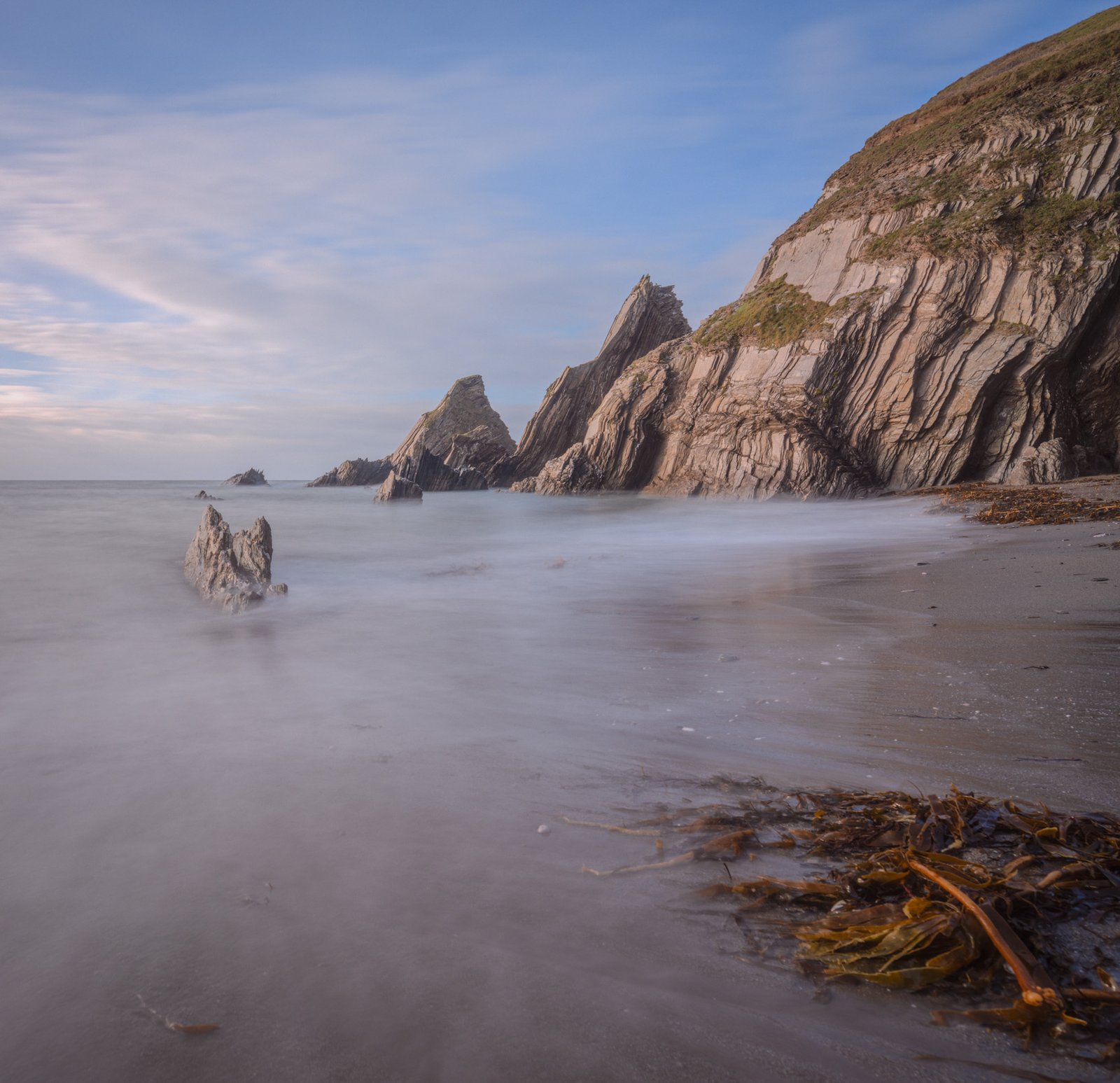
Westcombe’s rock formations are steeply angled and unforgiving. Lean too heavily into the wide perspective and they lose their sense of mass. Pull back too much and the frame becomes empty, with too much sky and not enough tension.
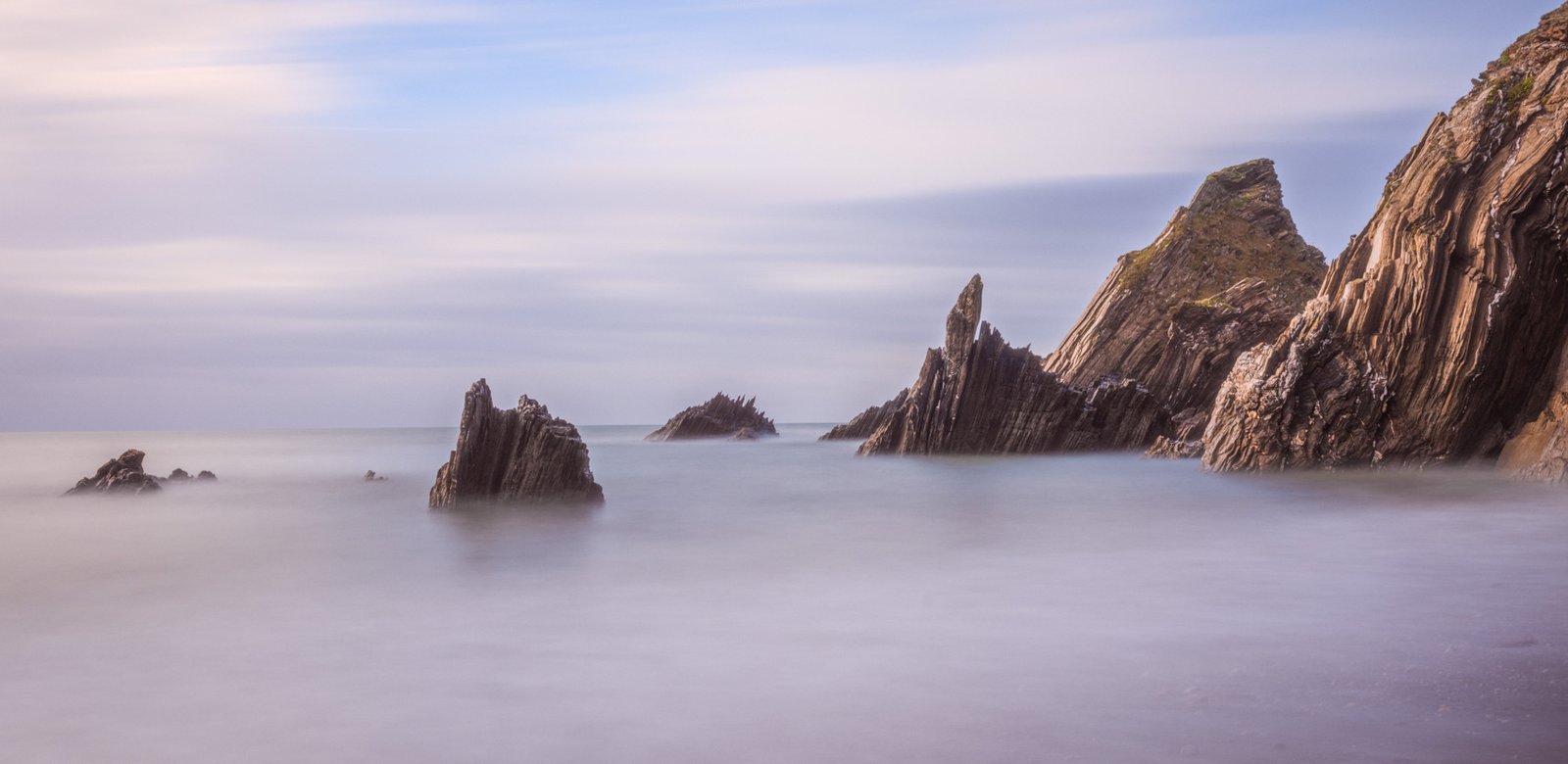
The images that worked best for me were the ones where I let the rocks dominate without crowding the frame — balancing them against softened water and a calm, understated sky. Long exposures helped here, smoothing the movement of the sea while still allowing its presence to be felt.
There’s a fine line between calm and lifeless, and this beach sits right on it. Finding that balance became the quiet challenge of the morning.
Filters, Vignetting, and Practical Realities
One practical consideration became clear fairly quickly: my current filter setup isn’t ideal for this lens.
I use magnetic filters on most of my lenses, but stacking them on the Laowa 19mm introduced noticeable vignetting. On medium format, especially at wider focal lengths, there’s very little tolerance for that kind of compromise.
It’s not a flaw of the lens — just a reminder that wide angles demand more careful choices when it comes to accessories. I’ll need to invest in additional filters or rethink the setup entirely before using this lens more extensively for long exposure work.
It’s part of the process, and something best discovered early.
Processing With Restraint
Processing was deliberately minimal.
I started with light adjustments in Lightroom — basic exposure balancing and gentle tonal corrections, nothing more than what was needed to get the files into a neutral state. From there, I applied a Fujifilm Velvia 50 emulation using Dehancer Pro.
Velvia is easy to overdo, particularly with blue skies, but used carefully it brought a subtle richness to the rock tones without pushing the scene into something it wasn’t. The colours never became dramatic — and I didn’t want them to. The aim was simply to add a touch of character while staying true to how the morning felt.
The processing was there to support the images, not to carry them.
Not a Review, Just Time Spent
This isn’t a technical review of the lens, and it was never meant to be. There are plenty of places online where lenses are reduced to charts, crops, and edge performance.
What mattered to me here was whether the lens encouraged engagement or got in the way. Whether it slowed me down in a productive way. Whether it allowed me to come away with images that felt considered rather than rushed.
Some of the photographs from Westcombe Beach were taken with other lenses, and that’s fine. This wasn’t a one-lens exercise. It was a morning on the coast, an opportunity to walk, look, and see what stayed with me once I got home.
A few images did.
A Quiet Beginning to the Year
As a first shoot of 2026, this felt like an honest starting point. No dramatic conditions. No heroic light. Just a stretch of coast, a new lens used with open eyes, and enough time to pay attention.
If this sets the tone for the year ahead, I’m comfortable with that.
Less chasing. More seeing. And a willingness to walk a little further than planned.
0 Comments