
The Photographs I Didn't Understand Until Twenty Years Later
Some photographs tell you exactly what they are the moment you press the shutter.
Others spend years sitting quietly on a hard drive before revealing what they were really about.
These photographs belong firmly in the second category.
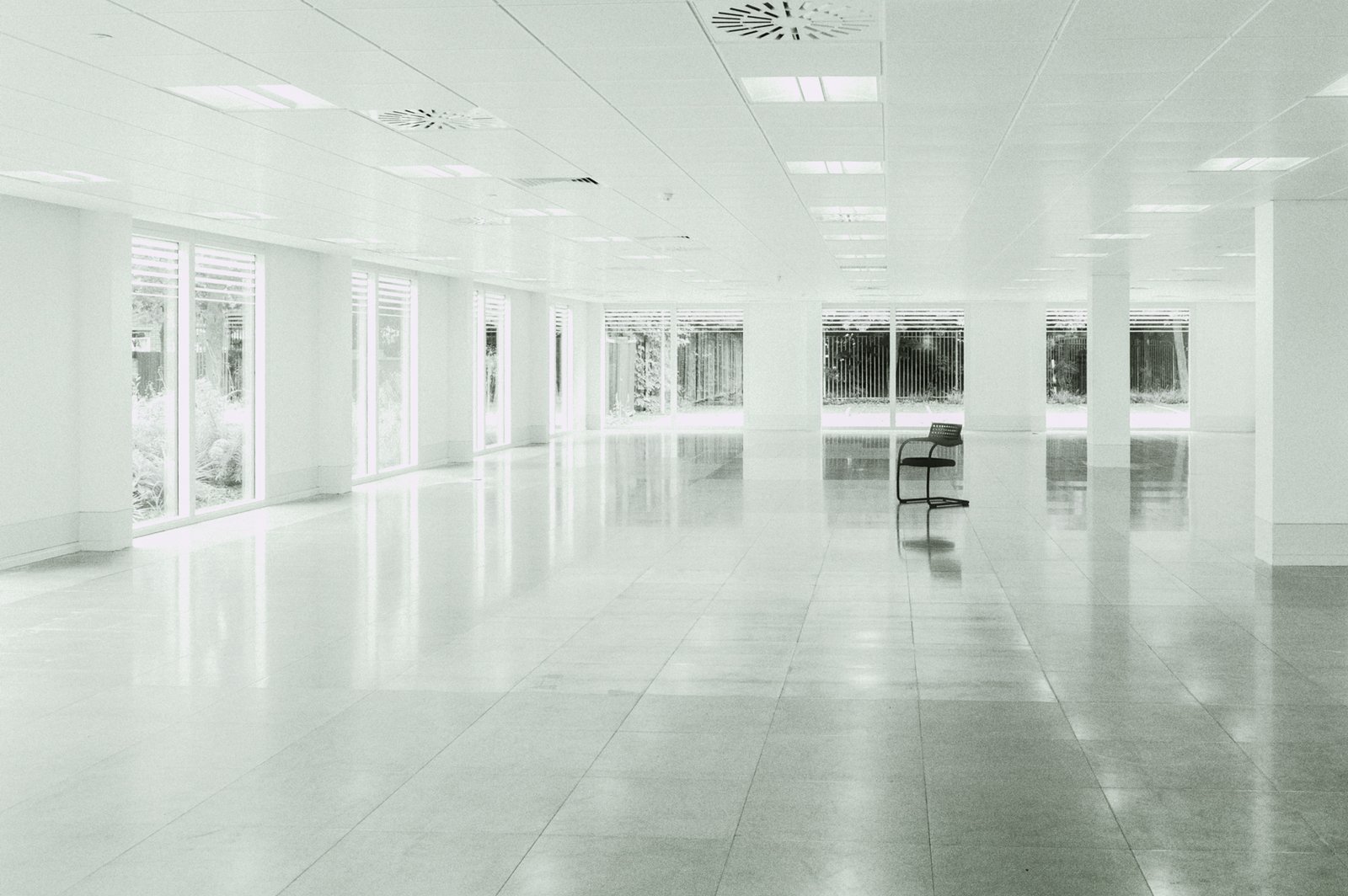
I made them around twenty years ago while working for a clinical research company. At the time I worked in IT security, a role I'd eventually spend fourteen years doing before finally leaving in 2014. The photographs were never intended as part of a long-term project, nor were they made in pursuit of a fashionable photographic genre. In fact, when I took them, I'd never even heard the phrase liminal space.
Yet today, that's exactly how I think of them.
The irony is that I only realised this after watching photographers such as Nick Carver exploring liminal spaces on YouTube. His work reminded me of a folder of forgotten images buried somewhere in my archive. It took a while to find them, but when I finally did, I looked at them with completely different eyes.
At first I simply thought they were interesting photographs.
Then I realised they weren't really photographs of an empty office at all.
They were photographs of me.
An empty building
The office had recently undergone a complete refurbishment.
It wasn't abandoned.
Quite the opposite.
It was immaculate.
Freshly decorated.
Freshly painted.
Waiting for its next tenant to choose carpets, furniture and décor.
Normally the building would have accommodated around three hundred people. It would have been filled with conversations, ringing telephones, hurried footsteps and all the background noise that makes an office feel alive.
Instead, there was silence.
Not peaceful silence.
The kind of silence that almost becomes a sound of its own.
People often describe overwhelming noise as deafening.
I'd argue complete silence can be deafening too.
To photograph the building I had to arrange access through the facilities manager. The building needed unlocking, health and safety checks had to be completed and permission granted before I could wander around alone with my camera.
Everything simply fell into place that day.
I probably made around twenty photographs.
Nothing more.
At the time they were simply images for a university photography assignment titled People and Place.
Ironically, I photographed almost no people.
Looking back
I've often wondered why.
I wasn't consciously avoiding people.
But looking back, I realise I'd always been uncomfortable photographing strangers.
Even now, although I'll happily photograph cities and landscapes, I still find myself drawn towards places rather than people.
Perhaps that preference has been there all along.
Looking through my work over the years, there seems to be a common thread.
Quiet beaches before sunrise.
Woodlands without walkers.
Venice in winter before the crowds.
Long exposures that remove people from busy streets.
Empty buildings.
Places waiting for something.
At the time I never recognised the pattern.
Maybe we don't choose our subjects as much as we think we do.
Sometimes they quietly choose us.
The office I remember
The strange thing about these photographs is that the office itself never really had much personality.
Before the refurbishment it was functional.
Afterwards it was simply cleaner, brighter and somehow even more clinical.
Yet the photographs don't remind me of architecture.
They remind me of how I felt.
When I look at them now, I remember a period of my life where everything had begun to stagnate.
The job paid well.
From the outside it probably looked secure.
But internally I'd stopped moving.
Initiative no longer seemed to matter.
New ideas rarely went anywhere.
I was old enough to know that changing career becomes harder with age, especially in technology, where experience can sometimes be viewed as yesterday's news rather than accumulated knowledge.
So I stayed.
Not because I wanted to.
Because it seemed easier.
Or perhaps safer.
The plan, if you could call it that, was simply to carry on until retirement or redundancy.
Looking back now, that's a surprisingly bleak sentence to write.
But it was probably true.
Alone in a crowd
The strange thing is that loneliness isn't always about being physically alone.
During the week I worked in a building full of people.
Yet I rarely spoke to anyone.
Outside of work, weekends often became an exercise in drinking too much and trying not to think too deeply about Monday morning.
I didn't recognise it as depression.
I certainly wouldn't have described myself as depressed.
But memory has a way of rearranging events.
Looking backwards often reveals patterns that were invisible while you were living them.
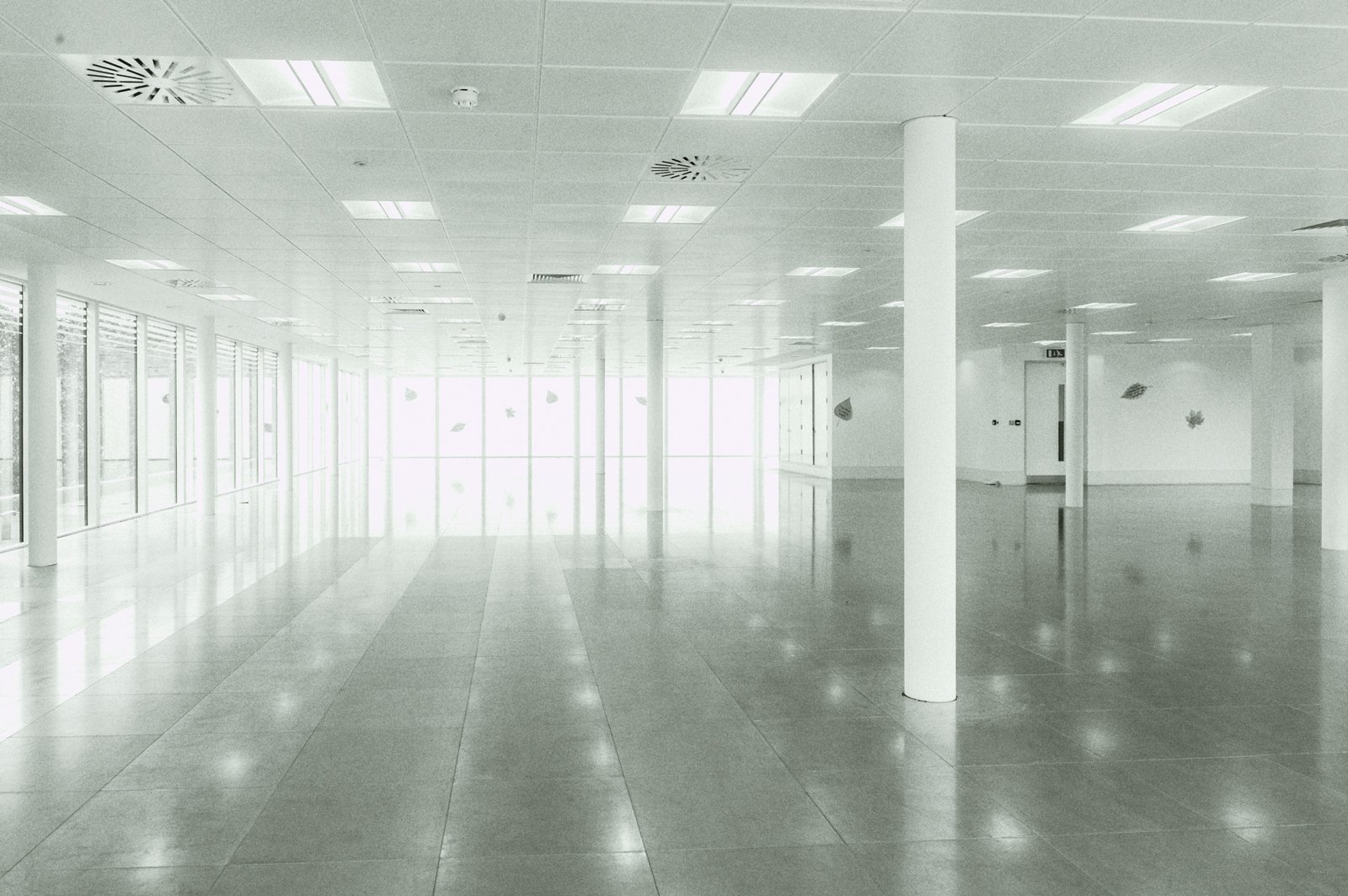
When I stand in those empty rooms today, at least in my memory, I don't really see architecture.
I see isolation.
Light beyond the glass
One thing strikes me every time I revisit these photographs.
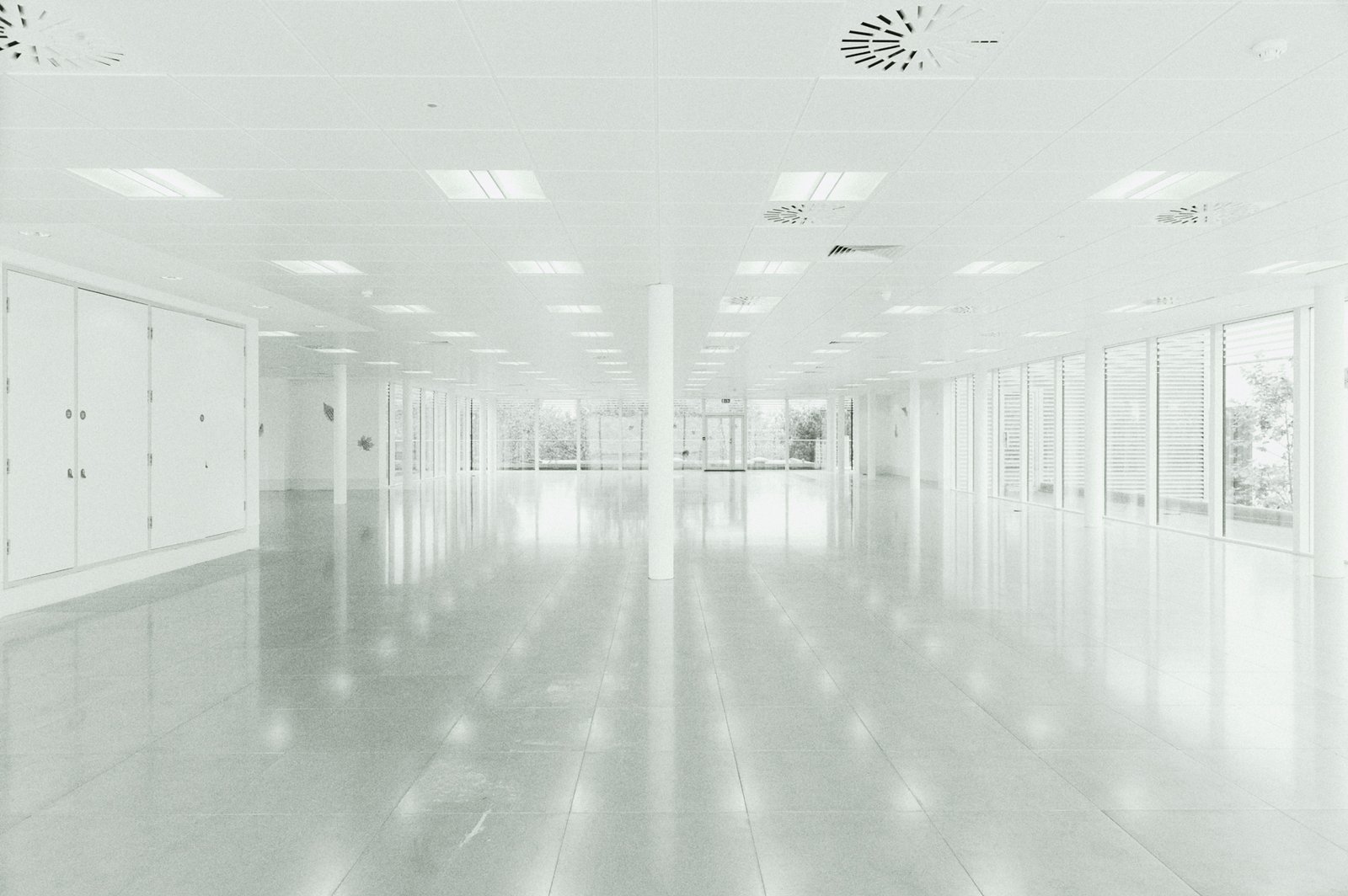
The brightest part of almost every image lies beyond the windows.
Outside.
Beyond the building.
The office itself feels enclosed.
Ordered.
Controlled.
Clinical.
The outside world seems almost overexposed.
Unreachable.
I honestly don't know whether I composed the photographs with that in mind.
I doubt it.
If someone had asked me twenty years ago why I'd framed them this way, I'd probably have spoken about balance, perspective and composition.
Nothing more.
But photographs have a habit of revealing things the photographer didn't know they were saying.
Perhaps that's what they're doing here.
I can't say for certain.
But I can't ignore it either.
Order
Another thing I've noticed is how structured the compositions are.
Straight lines.
Symmetry.
Columns carefully positioned.
Horizons level.
Everything feels measured.
Deliberate.
I don't remember consciously trying to impose order.
Yet I wonder now whether my subconscious was doing exactly that.
Life at the time felt increasingly chaotic.
Not visibly chaotic.
From the outside everything probably looked perfectly normal.
Steady job.
Regular income.
Routine.
Inside, however, things felt rather different.
Perhaps creating ordered photographs was my way of constructing a world that felt calmer than the one inside my own head.
Maybe that's reading too much into them.
Maybe not.
The truth is I'll never know.
Discovering liminal spaces
For years these images sat quietly in my archive.
Occasionally I'd remember them existed.
Then I'd move on.
They felt unfinished somehow.
Like a dream that refuses to disappear completely but never quite returns either.
Then, years later, I stumbled across photographers exploring what has become known as liminal spaces.
I knew the phrase.
Vaguely.
But I'd never really understood what it meant.
Watching those photographs felt oddly familiar.
Not because mine looked the same.
Many of the best-known liminal space images have a distinctly nostalgic quality, often reminding viewers of schools, swimming pools, shopping centres or airports from childhood.
Mine felt different.
But emotionally they occupied similar territory.
They captured places between one state and another.
Rooms waiting for occupation.
Buildings suspended between two lives.
Spaces that somehow felt disconnected from normal time.
That's when I remembered my own photographs.
Re-editing the past
When I found the original files, I decided to revisit them.
Not to change them.
More to uncover what I'd originally seen.
Digital processing has improved enormously over the last twenty years.
So has my own understanding of editing.
Back then I spent far more time experimenting.
Today I usually have a clearer idea of where I want an image to end up before I even begin.
The new edits softened the light slightly.
They emphasised the atmosphere I'd always remembered rather than the literal appearance of the building.
But the editing wasn't really the important part.
The important part was finally seeing the photographs for what they had always been.
A self-portrait without a person
When people think of self-portraits they naturally imagine faces.
These photographs contain none.
Yet I now think they're some of the most personal images I've ever made.
They document a version of me that no longer exists.
A man standing in an empty office who had no idea that he was quietly photographing his own emotional landscape.
He thought he was photographing architecture.
He wasn't.
He was photographing stagnation.
Routine.
Isolation.
The strange feeling of seeing light outside but believing it somehow belonged to somebody else's future.
I couldn't have written those words twenty years ago.
Perhaps I couldn't even have admitted them to myself.
Photography has the curious ability to record more than the photographer consciously intends.
Sometimes the camera notices things before the person holding it does.
Time changes photographs
The photographs themselves haven't changed.
The pixels are identical.
What has changed is the person looking at them.
Twenty years ago they were simply interesting studies of an empty office.
Today they're evidence.
Not evidence of what the office looked like.
Evidence of who I was.
Memory is selective.
It edits.
It rewrites.
It forgets.
Photographs don't.
Sometimes they preserve truths that we're not ready to recognise until much later.
Perhaps that's why they linger.
Perhaps that's why certain images stay buried in our archives instead of being deleted.
Some unfinished part of us knows they'll matter one day.
Closing the circle
If these photographs had remained buried forever, I suspect I'd still have carried them somewhere in the back of my mind.
Not consciously.
More like unfinished business.
A dream you can't quite remember.
Something unresolved.
Finding them again feels strangely different.
Not nostalgic.
Not sad.
Complete.
Looking at them today I still see anxiety.
Loneliness.
Melancholy.
But I also see distance.
I can measure how far life has moved on.
The office no longer defines me.
The job no longer defines me.
The person standing in those empty rooms no longer defines me either.
Instead, the photographs have become a reminder that difficult periods eventually become history.
That emotions fade.
That people change.
Most importantly, they've shown me something I couldn't possibly have understood when I first pressed the shutter.
I thought I'd photographed an empty office.
What I had actually photographed was a chapter of my own life.
And after twenty years, I finally understand it.
Photographic note
These photographs were taken around 2006 as part of a university project titled People and Place. They were made on a Nikon D3 and remained largely forgotten until I recently revisited them after discovering the work of photographers exploring liminal spaces. The recent edits aim to reflect how the spaces felt rather than simply how they looked.
0 Comments